The Okavango Delta in north-west Botswana is a river delta with no sea: water from the Angolan highlands spreads over Kalahari sand to cover up to 15,000 km² of channels, islands and floodplain. It's a 2014 UNESCO World Heritage Site and the core range of the world's largest national elephant population.
Rivers usually end at the sea. This one doesn't. The Okavango rises in the Angolan highlands, runs 1,500 km south-east as southern Africa's third-largest river, then hits a tectonic trough in the middle of the Kalahari and fans out across the sand. Roughly 97% of the water is lost to evaporation and transpiration before it can find an outlet — there isn't one. What remains spreads over 6,000 to 15,000 km² of channels, lagoons, reed beds and palm-fringed islands in north-west Botswana, forming Africa's third-largest alluvial fan.
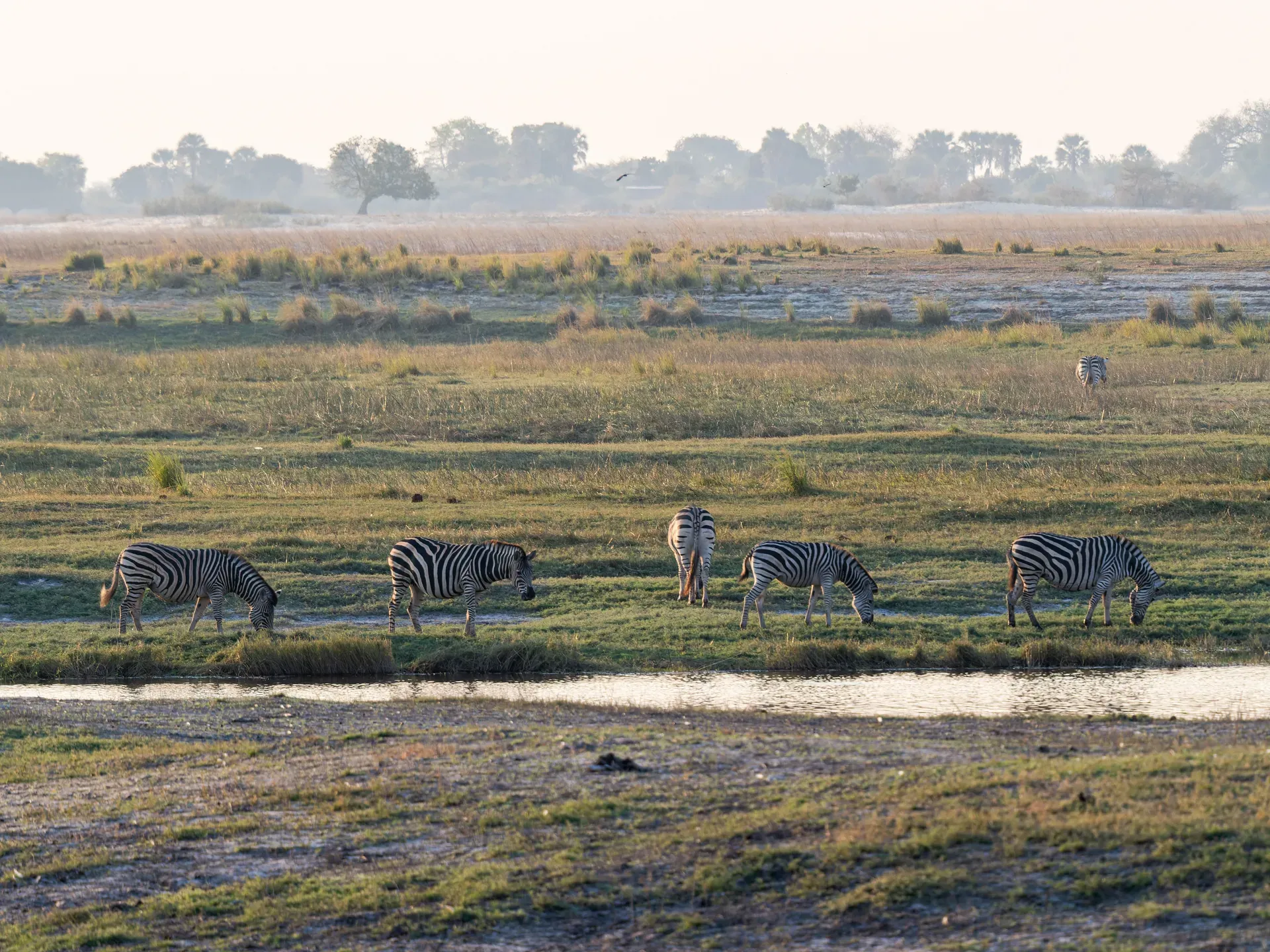
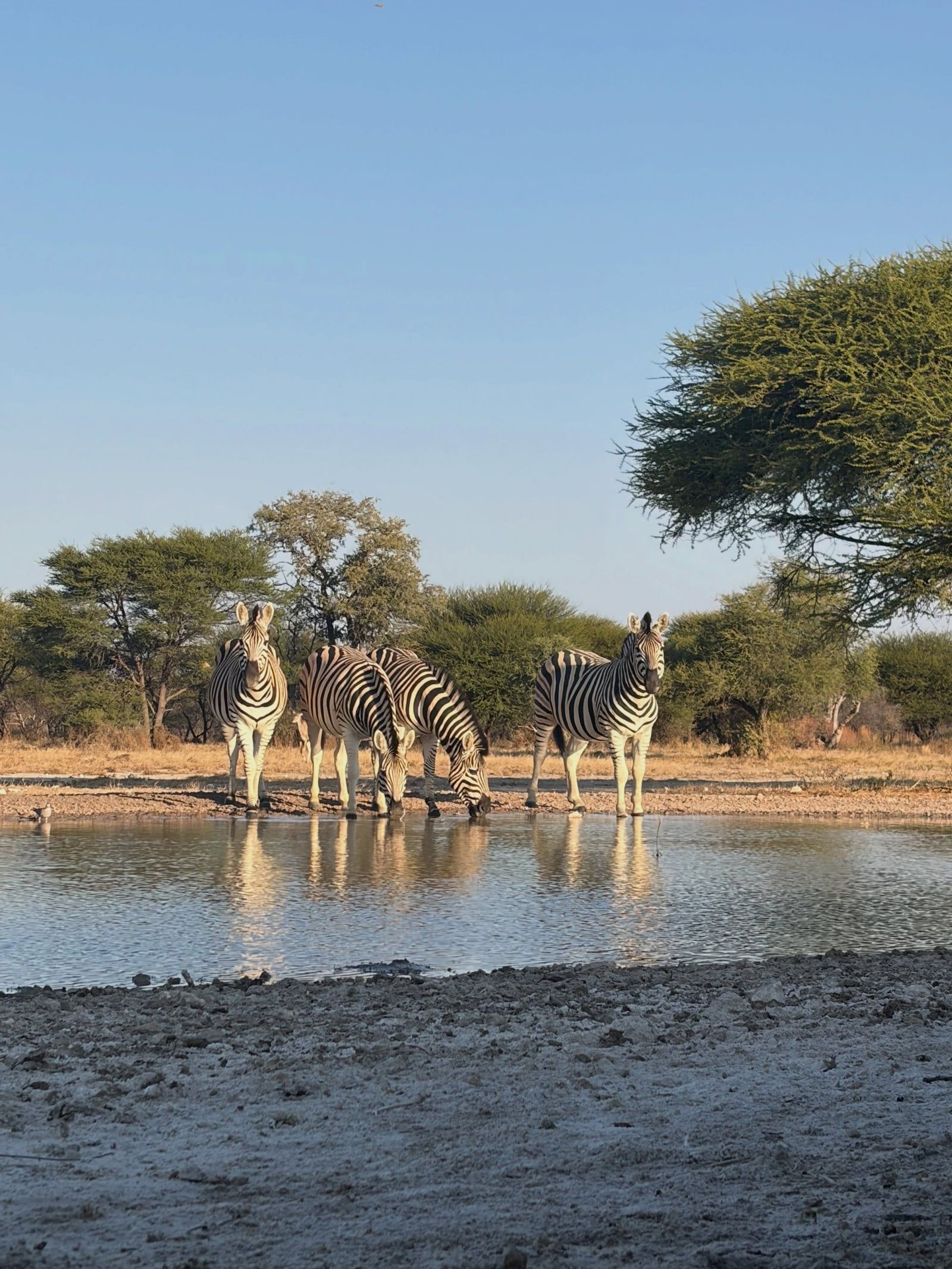
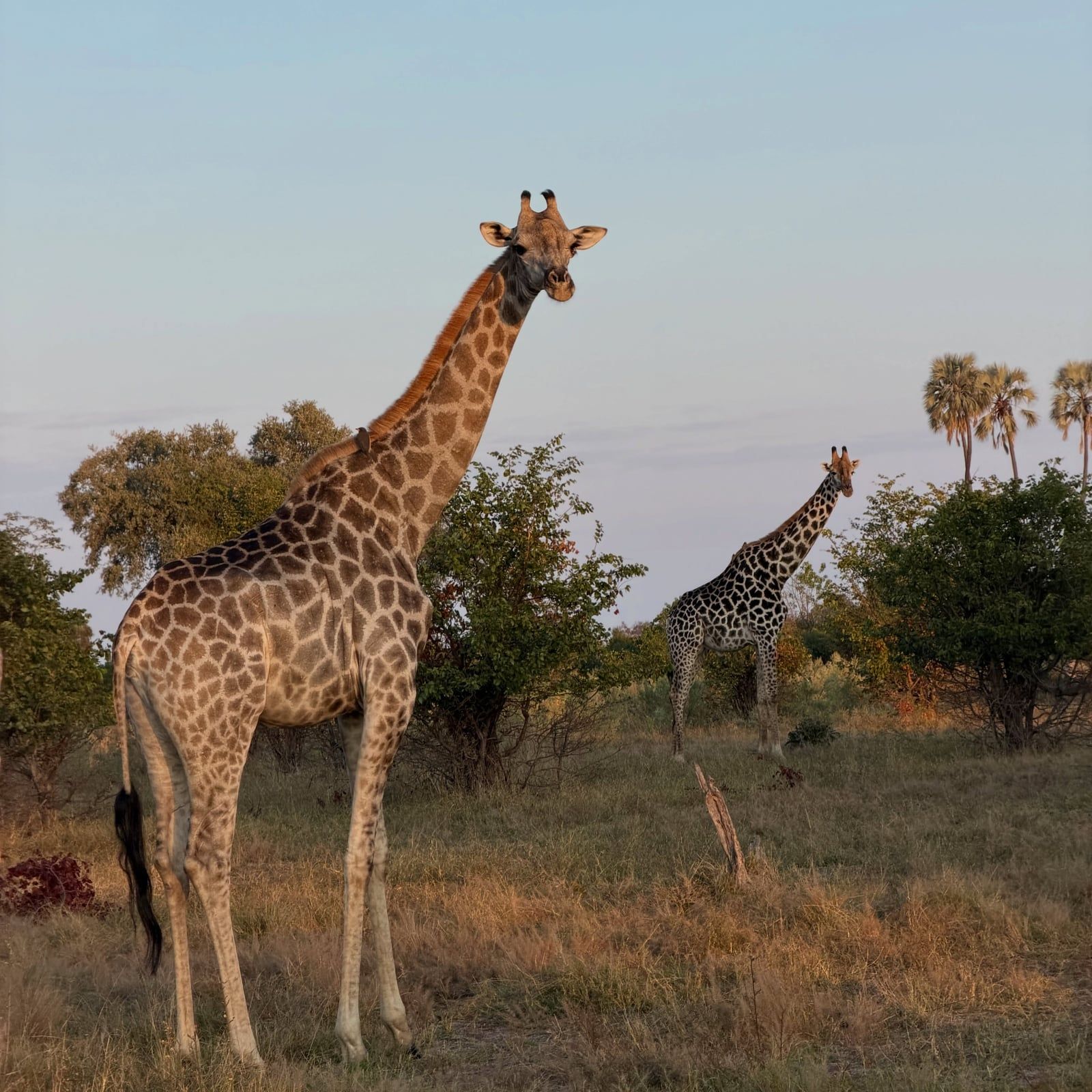
A wetland the size of a small country, sitting in a desert, attracts everything with legs or wings. Botswana's roughly 130,000 elephants — the largest national population on Earth — use the delta as their core range, alongside cheetah, black and white rhino, lion and African wild dog. The bird list runs to 482 species, 24 of them globally threatened, among them six vultures, the Wattled Crane, the Southern Ground-Hornbill and the Slaty Egret, a bird you essentially cannot see anywhere else as easily. UNESCO inscribed the delta in 2014 as its 1,000th World Heritage Site; it had already been a Ramsar Wetland of International Importance since 1996.
Moremi Game Reserve protects the wildlife-rich eastern third, including Chief's Island, the delta's largest landmass. Beyond it, 18 Wildlife Management Areas and concessions run by community trusts and private operators cover the rest. You explore by mokoro (a dugout canoe poled from the stern, silent enough to drift past elephants), motorboat, open 4x4 or light aircraft — most inner-delta camps are fly-in only, reached by 10-to-45-minute hops from Maun. Three nights is the accepted minimum; five to seven lets you combine a water camp with Moremi or Khwai. Time it for May to August, when the flood arrives and the full menu of land and water activities is running.
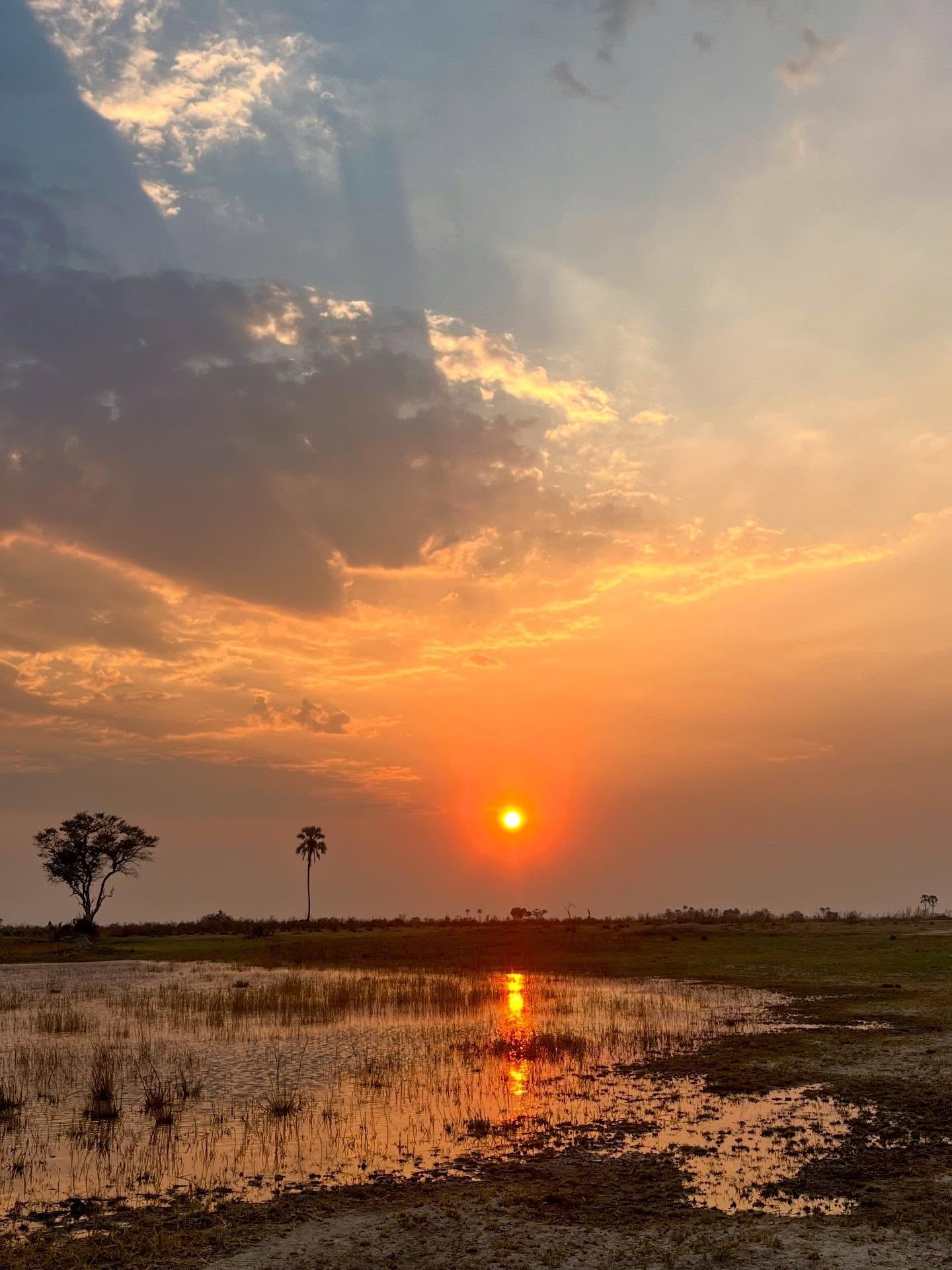
The delta is the outcome of geography, patience and timing. The Okavango drains the Angolan highlands and empties into an endorheic basin in the central Kalahari — a trough with no exit, sitting 930 to 1,000 m above sea level, that the river has been filling with sediment for millennia. The floodplain is almost impossibly flat: total height variation is under 2 m. Water therefore crawls rather than flows, and it arrives late. Rain falling in Angola around January takes months to work downstream, so the flood peak hits the delta in July, at the height of Botswana's dry winter, when the surrounding bush is at its thirstiest. The paradox defines the place — animals crowd onto shrinking islands and riverbanks just as the water spreads widest.
The BaTawana people, whose chiefs governed from the area around present-day Maun, used the delta's dry islands as royal hunting grounds — Chief's Island chief among them, hence the name. By the late 1950s and early 1960s, commercial hunting and cattle encroachment were taking a visible toll on the wildlife. On 15 March 1963, the BaTawana proclaimed Moremi Game Reserve, named after Chief Moremi III, who had recently died. His widow, Elizabeth Pulane Moremi, drove the proclamation through — making Moremi one of the first reserves in Africa created by an indigenous community rather than a colonial administration. The royal hunting grounds were folded into the reserve in the 1970s, and in 1979 Botswana's Department of Wildlife and National Parks took over management.
Protection then scaled up in layers. On 12 September 1996 the delta became Ramsar site 879, a Wetland of International Importance. In 2014, at UNESCO's 38th session, it was inscribed as the 1,000th World Heritage Site — 2,023,590 ha of core area with a buffer zone of 2,286,630 ha, registered under natural criteria (vii), (ix) and (x).
Today about 40% of the property sits inside Moremi. The rest is divided among 18 Wildlife Management Areas and Controlled Hunting Areas administered through the Tawana Land Board under the Tribal Land Act, and operated by community trusts and private concession-holders. A national hunting ban applies across the entire property, so the wildlife economy runs on visitors, not trophies.
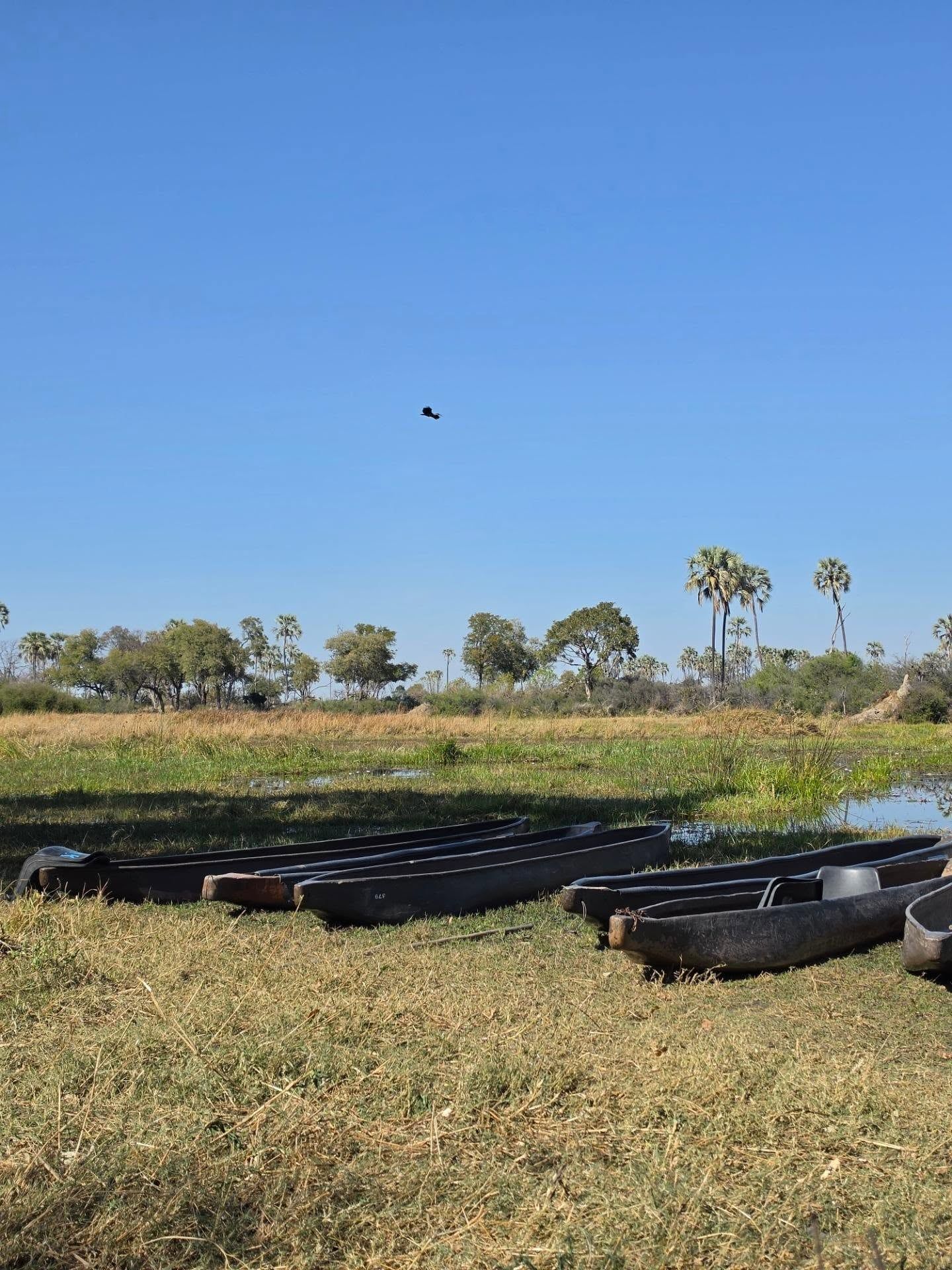
About 11 km³ of water enters the delta each year from Angola. Depending on the season, that covers anywhere from 6,000 km² to 15,000 km² — permanent swamp of roughly 600,000 ha plus up to 1.2 million ha of seasonally flooded grassland. In the channels the water is clear and mostly shallow, which is the whole point of the mokoro: a poler standing at the stern can push a dugout through grass and reeds where no motorboat can go. Motorboats stick to the deeper channels; 4x4s to the dry islands.
Habitats pack together tightly. Permanent channels and lagoons give way to papyrus and reed beds, then seasonal floodplains, riparian forest, mopane woodland and dry savanna — plus thousands of islands, from sandbars to Chief's Island, the largest landmass and a former royal hunting ground with some of Africa's densest predator numbers along its floodplain edges. UNESCO's inscription tally: 1,061 plant species, 130 mammals, 482 birds, 89 fish and 64 reptiles.
Moremi Game Reserve covers the eastern third, and its appeal is contrast: dry mopane woodland beside permanent water at Xakanaxa, Third Bridge and the Khwai River. Animals don't have to choose between drinking and browsing, so a single day can run from tracking lion near Chief's Island to a late-afternoon lagoon cruise past hippos. The reserve holds all of the Big Five, Africa's largest red lechwe population — an antelope built for splashing through flooded grassland — and some of the continent's best African wild dog country. One quirk worth knowing: private concessions outside the reserve permit night drives, off-roading and armed walking safaris, while Moremi bans all three, keeps the speed limit at 40 km/h, and requires you to stay in your vehicle.
The delta belongs to the BaTawana, and its most-visited protected area carries their name. Moremi Game Reserve honours Chief Moremi III, and it exists because his widow, Elizabeth Pulane Moremi, pushed the 1963 proclamation through after watching hunting and cattle erode the wildlife. That made it one of the first reserves in Africa gazetted by an indigenous community rather than imposed by a colonial government — a point of real pride in Botswana. Chief's Island itself was the BaTawana royal hunting ground before it became a conservation landmark.
For river communities, the water is a workplace and the mokoro is the tool of the trade. These dugouts, traditionally carved from ebony or sausage-tree wood, are poled from the stern by specialists — and today the polers guiding visitors through the channels are hired through local structures, turning a traditional skill into a wage. Motorboat safaris aside, the mokoro remains how the delta's shallowest corners get visited at all.
Since the 2014 inscription, tourism revenue flows through 18 Wildlife Management Areas run by community trusts under the Tawana Land Board. Khwai, the concession beside Moremi's North Gate, is the clearest example of what that means in practice: the community sets its own activity rules, allows the night drives and guided walks that Moremi bans, caps vehicle numbers at wildlife sightings, and charges camping fees only. Farther afield, at roughly 370 km from Maun, Tsodilo Hills — the 'Mountain of the Gods' and Botswana's first UNESCO cultural site — holds over 4,500 rock paintings at more than 400 sites, a reminder that people have been reading this landscape for a very long time.
Rain falling in Angola around January takes months to reach Botswana, so the delta's water peaks in July — the middle of the local dry winter. Maximum water arrives when the surrounding bush is at its driest.
Of the ~11 km³ of water entering each year, roughly 97% is lost to evaporation and plant transpiration. Almost none flows out of the basin — there is no outlet to any sea.
Botswana holds roughly 130,000 elephants, the largest national population on Earth, and the delta is its core range. The 2014 UNESCO inscription specifically cites them.
When UNESCO inscribed the delta in 2014 at its 38th session, it became the 1,000th property on the World Heritage List — a milestone Botswana marked nationally.
Across the entire floodplain, elevation varies by less than 2 m. That flatness is why the water spreads so far and why mokoro canoes, poled by hand, remain the practical way through.
A mokoro is a dugout canoe traditionally hewn from ebony or sausage-tree wood, poled from the stern. It can pass through channels too shallow for any boat with a motor.
Moremi Game Reserve, proclaimed 15 March 1963, was driven by Elizabeth Pulane Moremi, widow of Chief Moremi III — making it one of Africa's first reserves created by an indigenous community.
It's an inland (endorheic) delta in north-west Botswana, formed where the Okavango River — rising 1,500 km away in the Angolan highlands — fans out over Kalahari sands without ever reaching the sea. Roughly 97% of the ~11 km³ of annual inflow is lost to evaporation and transpiration. The flooded area swings between 6,000 and 15,000 km² depending on season.
UNESCO inscribed it in 2014 as the 1,000th World Heritage Site, under natural criteria (vii), (ix) and (x). It's also a Ramsar Wetland of International Importance (site 879 since 1996) and an Important Bird Area with 24 globally threatened bird species. The property spans 2,023,590 ha with a 2,286,630 ha buffer zone.
The flood arrives from Angola during Botswana's dry season, peaking in July — so May to August has the best water levels, when mokoro, motorboat and game-drive activities all run. Timing can shift by several weeks each year depending on the Angolan rains. October has the best game viewing but low water and extreme heat.
Fly into Maun Airport (MUB), Botswana's safari hub. Airlink and CemAir connect from Johannesburg in about 1.5 to 2 hours, Air Botswana flies from Gaborone (~1h20) and Kasane, and Ethiopian Airlines is the only long-haul carrier into Maun. From Maun, camps are reached by 10-to-45-minute light-aircraft hops or 2-to-6-hour road-and-boat transfers.
There's no single delta entrance ticket. Moremi Game Reserve costs BWP 270 per international visitor per day (BWP 205 for SADC residents) under the official 2025 Category A schedule, plus a vehicle fee, and standard camping adds roughly BWP 60 per day. Some operators still quote the older DWNP rate of P120 per person — confirm at the DWNP office in Maun and keep receipts, which are checked at each gate.
Yes, but it takes planning. Mokoro day trips from Maun run US$150–260 per person, and the Khwai Community Area charges camping fees only, with no daily entrance fee. Self-driving Moremi requires a high-clearance 4WD and confirmed campsite bookings made before entry. Inner-delta luxury camps, by contrast, run $525 to over $3,000 per person per night.
Three nights is the accepted good minimum; five to seven is recommended to catch both water and land activities. First-timers typically spend 3–4 days split between a water camp and Moremi or Khwai within a longer Botswana itinerary. A mokoro excursion itself averages about 3 hours.
Yes — it's classified as a higher-risk malaria area, especially in the north and during the November-to-April rainy season, because the wetlands breed mosquitoes heavily. Take prophylaxis year-round, use repellent and long sleeves at dawn and dusk, and drink bottled water only.
Most camps accept children from 6 or 7 years old and offer two-bedroom family tents, though children under 16 may need to share with an adult. Families with children under 12 usually must book a private vehicle at extra cost, walking safaris generally require age 16+, and babies aren't recommended. Motor-boat safaris are the calmest, most child-friendly activity.
Effectively no. Drones must be registered with the Civil Aviation Authority of Botswana, foreigners must apply in writing in advance (BWP 250 fee), and flying over national parks and game reserves is prohibited outright — drones have been confiscated from arriving passengers. Book a scenic helicopter or light-aircraft flight instead; helicopters give the better photo angles.
Browse verified tours with free cancellation and instant confirmation.
Find Tours