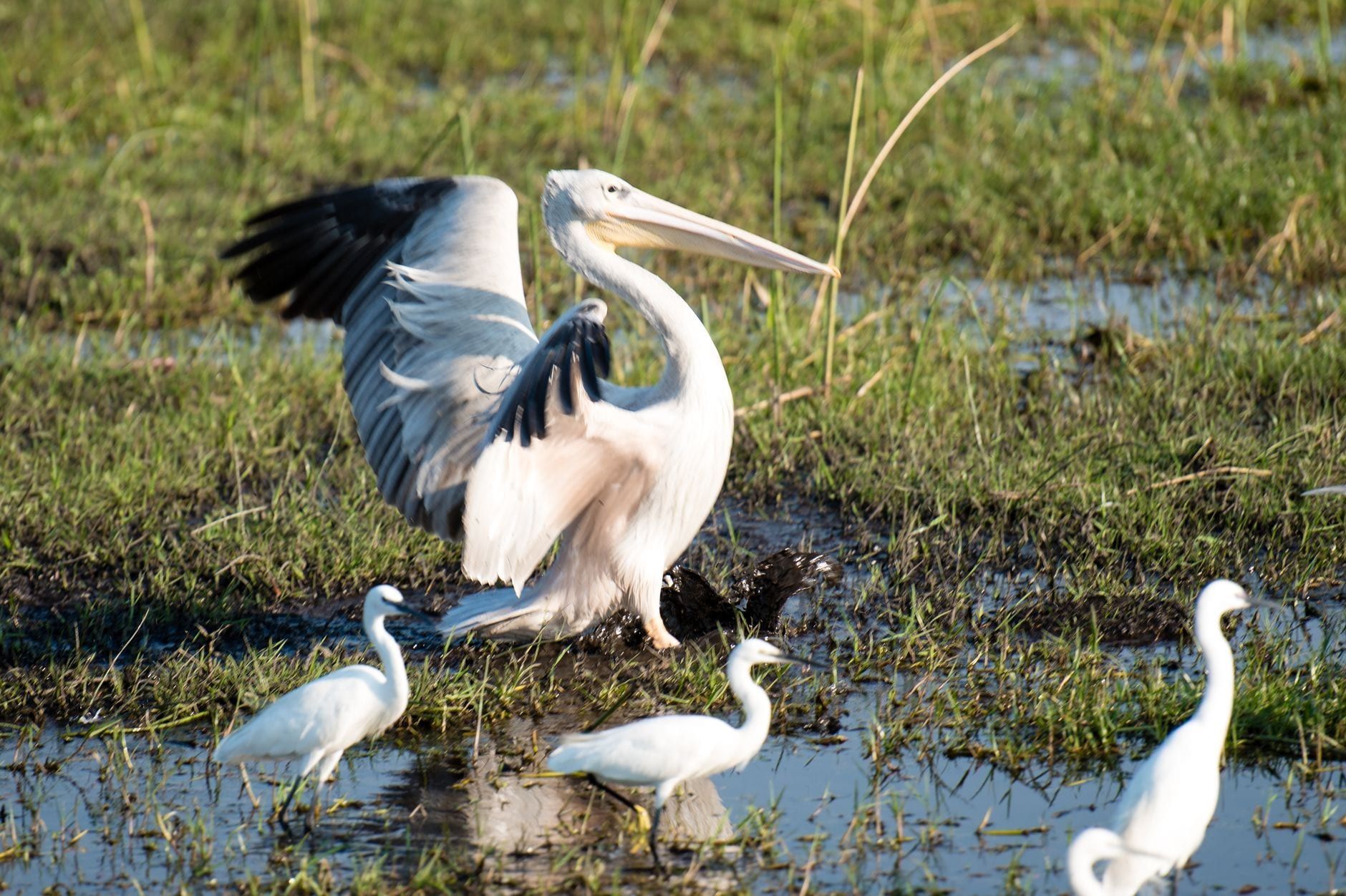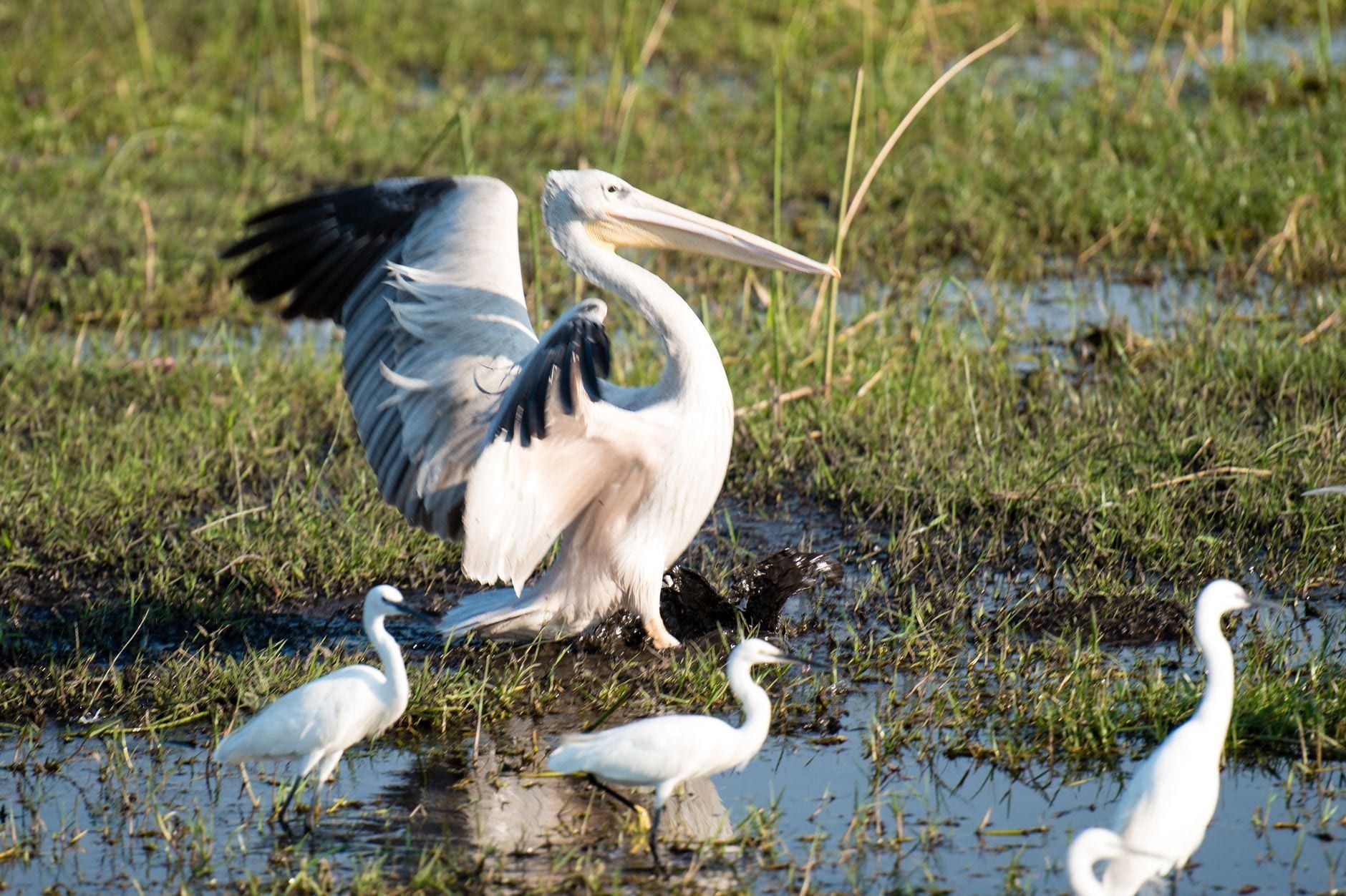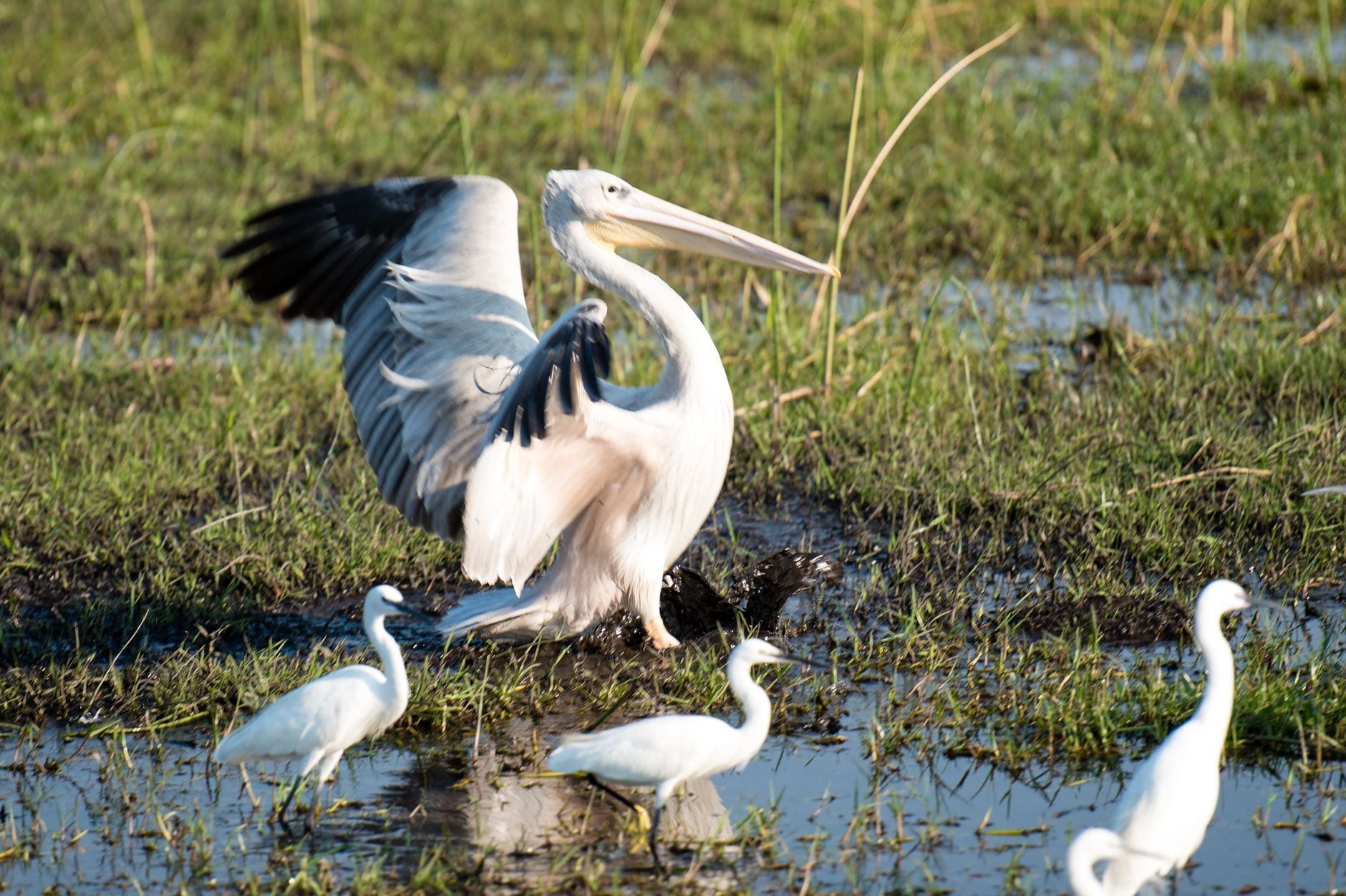
July to October is the best time to visit the Okavango Delta for wildlife. Those are the dry months, when animals crowd onto permanent water, the bush thins out, and every one of the four months earns a top rating from safari operators. If you also want the water experience — gliding through papyrus channels by mokoro — aim for July or August, when the flood is at its highest and boats, canoes and game drives all run at once.
Here is the twist that shapes everything else in this guide: the delta's water does not come from Botswana's rain. It falls on the Angolan highlands between November and April, then spends roughly four months travelling well over 1,000 km downstream, so the delta floods hardest in July — the middle of Botswana's dry season. Water and wildlife peak together, which is exactly why the busy months are busy, and why planning an Okavango Delta safari starts with a calendar rather than a map.
At a Glance: When Is the Best Time to Visit the Okavango Delta?
The short answer: July to October if game viewing is the point of your trip, and May to August if the water activities matter as much as the animals. Beyond that, the right month depends on what you're paying for. The essentials:
- Best time overall: July–October
- High season: July–October
- Low season (rates): December–March
- Best weather: May–August
- Worst weather: October, when days pass 40°C
- Best value: green season, November–April
By travel style, the verdicts split cleanly. Big-game watchers should take July–October, with September and October the most concentrated of all. Water-activity travellers want May–August, peaking with July's flood. Birders get their best months in November–April, when the migrants arrive, with a bonus round at the August–October heronries. Photographers face a genuine fork: green-season storm light and newborn animals, or dry-season dust and drama. Budget travellers get the clearest call of all — December to March, when rates fall 30–50% below peak.
There is no single perfect month because the two things that make the delta extraordinary — the flood and the wildlife concentrations — are driven by different clocks that only overlap for part of the year. SafariBookings rates January–March as merely fair, April–June and November–December as good, and July–October as excellent. That grid is a fair summary, but it hides the trade-offs worth making, which is what the rest of this guide unpacks.
Why the Delta Floods in the Dry Season: The Angola Flood Pulse
Every year, rain falling on Angola's highlands between November and April feeds the Cubango and Cuito rivers, which merge to become the Okavango. That water then travels roughly 1,200–1,500 km — the Okavango is southern Africa's third-longest river — down a gradient so gentle that the floodplain's height varies by less than 2 m across its whole width. The journey takes about four months. The result is the delta's signature paradox: peak flood arrives in July, when local rainfall is effectively zero.
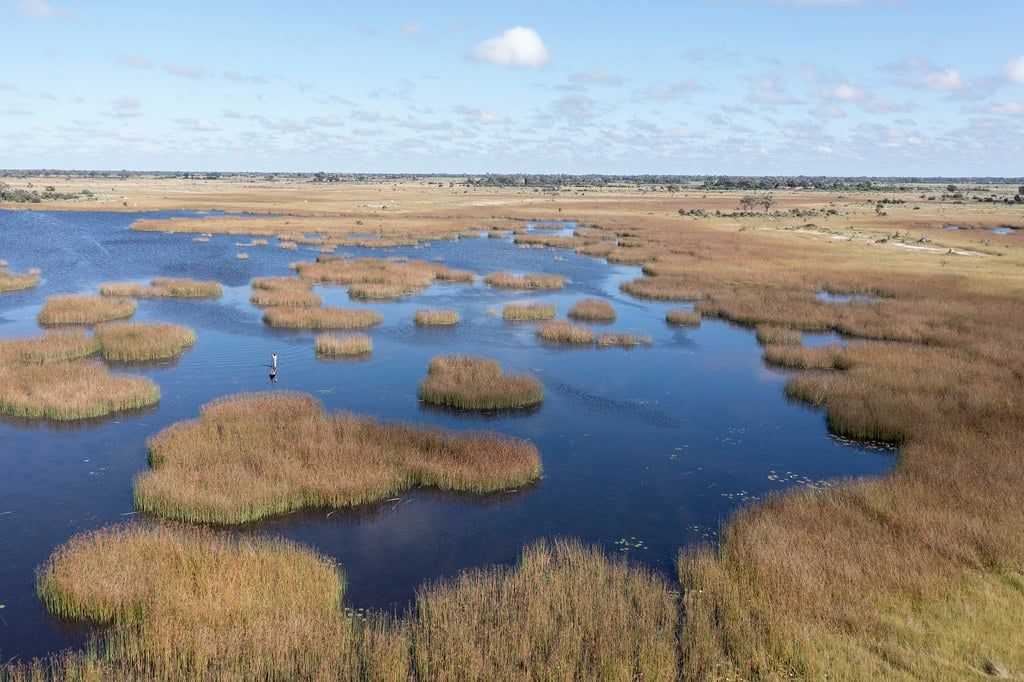
UNESCO recognised the oddity when it inscribed the delta in 2014 as the 1,000th World Heritage Site. The property covers 2,023,590 ha — about 600,000 ha of permanent swamp plus up to 1.2 million ha of grassland that floods seasonally — and the inscription notes that the annual flooding happens in the dry season, with plant and animal life cycles synchronised to it. About 11 cubic kilometres of water arrive each year and spread across 6,000–15,000 km² depending on the flood's size; roughly 97% of it is lost to evaporation and transpiration. At July's peak, satellite data shows more than 7,000 km² of visible open water.
The practical consequence is easy to state and worth memorising: the dry season is when the delta is wettest, and the wet season is when local water is lowest. Book a mokoro trip for February and you may be limited to camps on permanent channels; book it for July and the whole flooded system is open. One caveat — the flood shifts by several weeks from year to year depending on how much rain Angola got, so treat July as a centre point, not a switch.
The Dry Season & Peak Flood (May to October): Prime Game Viewing and Water Activities
May to October is when the delta does what most people picture: dry, open bush, animals stacked around permanent water, and channels deep enough to explore by canoe. Within that half-year, three distinct phases reward different travellers.
May and June: The Flood Arrives
The local rains stop, the flood starts spreading south, and game begins concentrating — but the peak-season crowds haven't landed yet. Daytime temperatures sit around a pleasant 25–28°C under clear skies, and new mokoro routes open week by week as the water advances. Nights turn genuinely cold: June and July average 6°C and can drop to 2°C or below freezing in the dry areas, so the pre-dawn drive is a fleece-and-beanie affair. Many camps still charge mid-season rates in May, though some start peak pricing in June — check the rate calendar before assuming.
July and August: Peak Flood, the Full Menu
July is the flood's peak, and August holds it. This is the only window when everything runs at once: mokoro trips through the shallow channels, motorboat cruises on the lagoons, and game drives across drying floodplains. Morning game drives start cold enough to see your breath, then afternoons warm to about 25°C under cloudless skies. It is also the most competitive window in Botswana — popular water camps sell out a year ahead, and if you're comparing mokoro safari tours, July–August availability is the first thing to check. The wildlife ledger is strong too: heronries fill with nesting herons, storks and egrets from August.
September and October: Shrinking Water, Concentrated Game
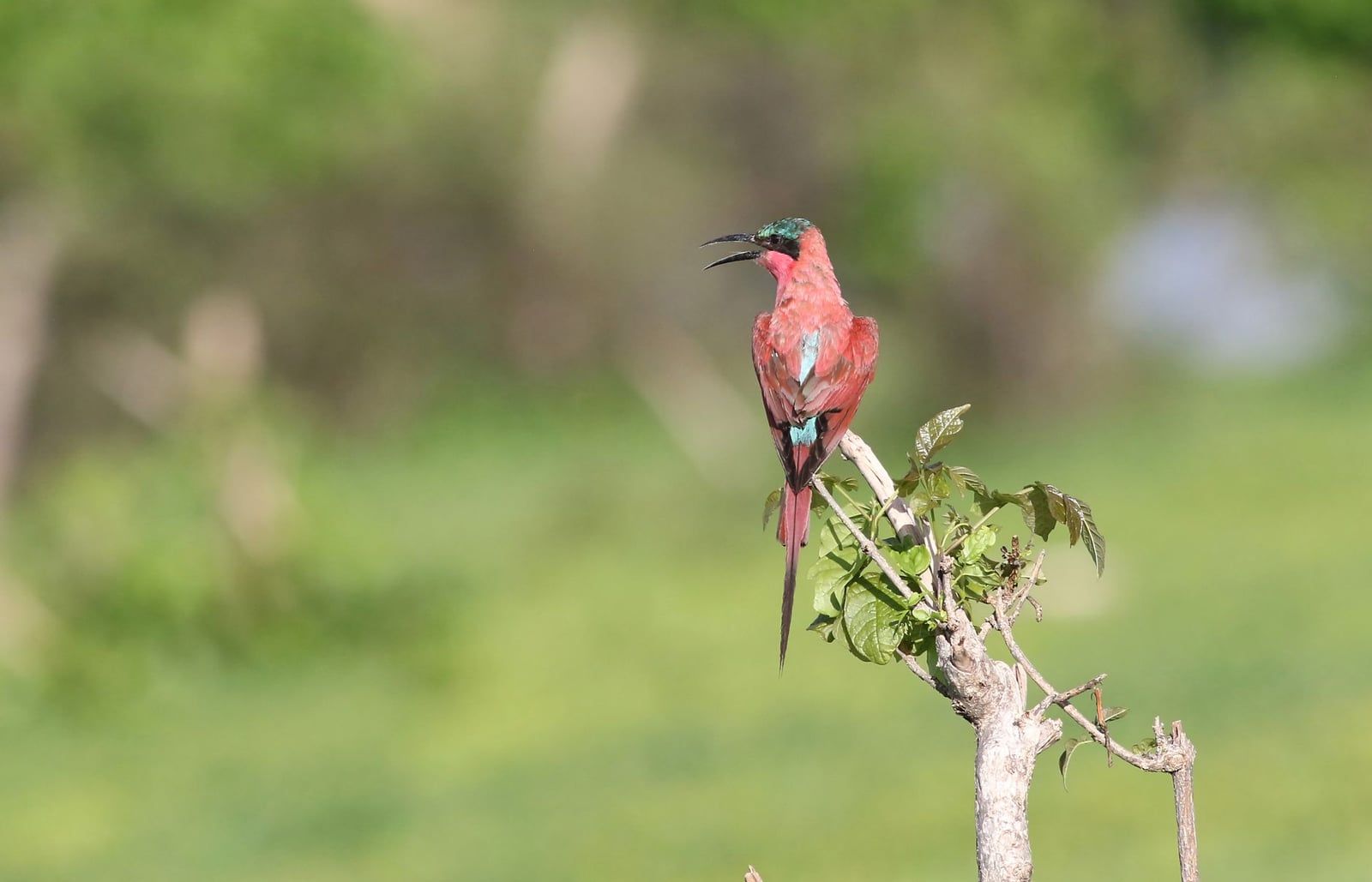
As the flood recedes and the heat builds, the remaining pools become the only water for kilometres, and the game piles in. September–October produces the year's most dramatic predator-prey interactions, and elephants gather in enormous herds. Carmine bee-eaters arrive in September, adding colour to the drying scene. October is the price you pay for the drama: daytime temperatures regularly exceed 40°C, it's rated the delta's worst-weather month, and low water in the channels limits mokoro trips. September is the smarter choice if you want the concentration without the furnace.
Wild Dogs, Heronries and the Barbel Run
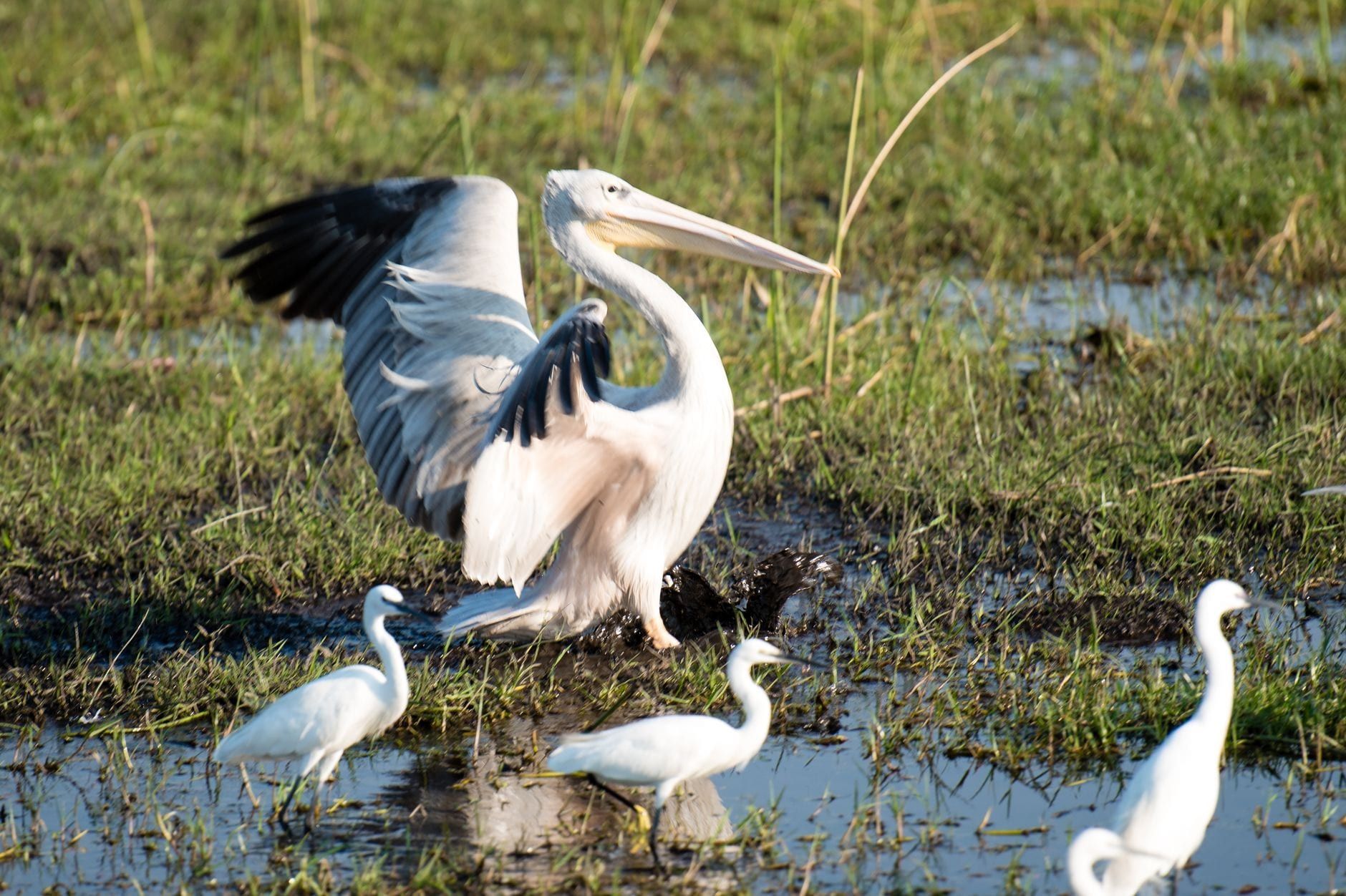
The dry season carries the year's marquee wildlife events. African wild dogs den roughly July–October, especially in the northern concessions, with guides scouting the dens from June — denning season means predictable, repeatable sightings of one of Africa's rarest predators. In August the barbel run hits the channels: catfish herding baitfish into boiling bait balls that draw fish-eagles and crocodiles, and it ranks among the delta's great spectacles. Add the August–October heronries and the September bee-eaters, and the delta's wildlife gives the dry season a calendar no other months can match.
Green Season (November to April): Birding, Calving and the Year's Best Value
From November the delta turns green, quiet and cheap. For three or four months it offers things the peak season simply cannot — and takes away others. Get the trade-offs right and it's a superb time to come; get them wrong and you'll wonder why nobody warned you.
Birding and Photography at Their Peak
The delta records 482 bird species, and between December and February more than 200 migratory species are present — carmine bee-eaters, storks and raptors among them, many in breeding plumage. It's an Important Bird Area holding 24 globally threatened species, including the wattled crane and the slaty egret. For photographers, the afternoon build-up of thunderheads gives storm light the dry season never produces, and the low-angle green-season light turns the floodplains luminous.
Calving and the Zebra Migration
Calving starts with the first November rains — tsessebe first, then impala and lechwe — and the predators move in behind the vulnerable young. It's harsh to watch and compelling in equal measure. Meanwhile, tens of thousands of zebra leave the delta for the Makgadikgadi salt pans, Africa's longest terrestrial migration, and catch them on the move and you'll share the sighting with almost no one.
The Honest Trade-Offs
Now the costs. Wildlife disperses as water stands everywhere and the bush thickens, so sightings take more work. Local water is at its lowest, which means mokoro trips are limited to camps on permanent channels. Afternoon storms interrupt activities, and heavy rain makes parts of the delta inaccessible by road. Mosquitoes peak with the rains, so malaria precautions matter most in these months.
What the Green Season Costs
This is where the season wins outright: green-season rates run roughly 30–50% below peak. At the budget end, lodges that charge about $480–530 per person per night in July–October drop to roughly $340–380 in the green months. At the top end the gap widens in absolute terms — luxury camps reach $3,000+ per person per night in peak season. For a birder or a photographer on a budget, that arithmetic is close to decisive.
The Shoulder Sweet Spot: April to June and November
Both shoulder windows trade a little certainty for a lot of value, and seasoned planners book them deliberately. May–June is the pick of the two; April is the quieter warm-up; November is the gamble that rewards a flexible temperament.
May and June: The Insider's Window
Experienced safari consultants consistently rate May–June as the smartest booking in the delta: the rains have stopped, the flood is rising, game is gathering, and the crowds haven't arrived. Conditions run close to what July delivers, at a price that hasn't caught up — mid-season rates typically apply through May. The catch is labelling: some camps classify June as peak even though it looks near-identical to May, so a week either side of 1 June can change your bill without changing your safari.
April: The Delta Wakes Up
April is the transition done gently. Rainfall falls to about 44 mm, morning mist sits on the floodplains, and the flood begins its rise, opening the first mokoro routes. The impala rut brings noise and chaos to the woodlands, daytime temperatures hold around 31°C, and mid-season rates apply. If you want a quiet, atmospheric delta before anyone else arrives, this is your month.
November: The Gamble That Often Pays
November is the year's most unpredictable month: the October heat lingers while the first storms break, and the delta greens up in the space of a fortnight. Calving begins with the first rains, drawing predators, and shoulder rates apply almost everywhere. Book it for the value and the newborns, and accept that some days will storm and others will simply be hot.
Okavango Delta Month-by-Month Guide: Weather, Wildlife and Water Levels
The tables below combine the month-by-month ratings used by safari operators with the delta's actual weather averages, flood status and the seasonal wildlife events that anchor each month. Read them as a planning grid: pick your priority — water, game, birds or price — then find the month that delivers it.
| Month | Low/High (°C) | Rain | Flood & Water | Highlight | Verdict |
|---|---|---|---|---|---|
| Jan | 19/32 | 94 mm | Local water at its lowest | Peak rains; quiet camps | Fair |
| Feb | 19/31 | 81 mm | Lowest levels | 200+ migrant bird species present | Fair |
| Mar | 18/31 | 56 mm | Flood starting downstream | Elephants feast on marula fruit | Fair |
| Apr | 14/31 | 44 mm | Flood begins to rise | Impala rut; first mokoro routes | Good |
| May | 9/28 | 11 mm | Flood spreading | Clear skies, mid-season rates | Good |
| Jun | 6/25 | 4 mm | Rising toward peak | Wild dog dens located | Good |
| Month | Low/High (°C) | Rain | Flood & Water | Highlight | Verdict |
|---|---|---|---|---|---|
| Jul | 6/25 | 3 mm | Peak flood; 7,000+ km² open water | Full mokoro-boat-drive menu | Excellent |
| Aug | 9/28 | 2 mm | High and stable | Barbel run; heronries fill | Excellent |
| Sep | 13/33 | 14 mm | Starting to drop | Carmine bee-eaters; game tightens | Excellent |
| Oct | 18/37 | 40 mm | Low in the channels | Game crowds the last pools | Excellent |
| Nov | 19/34 | 69 mm | Local low; new flood upstream | First rains; calving begins | Good |
| Dec | 19/32 | 82 mm | Local low | Migrants in breeding plumage | Good |
Two things the tables can't fix in place. First, the flood is an Angolan import, so its arrival and peak shift by several weeks each year depending on how much rain fell in the highlands — treat July as the centre of a range, not a date. Second, the ratings describe general conditions; a great guide on a quiet concession in April will beat a crowded vehicle in August. If you're torn, June and September split almost every difference.
Choosing When: Rates, Camps, Packing and Booking Lead Times
Getting the month right is half the planning; the other half is understanding how camps charge, how early you must commit, and what you can physically bring with you. The decisions below interact with your dates, so settle them together.
Rate Seasons vs Weather Seasons
The most common rate map runs: low season December–March, mid-season April–May and November, peak season June–October. It roughly tracks the wildlife calendar but misleads in both directions — May delivers near-peak game at mid-season prices, while some camps tag June as peak and others don't. Always check the specific camp's rate calendar rather than assuming. Note also that park fees sit outside lodge rates: Moremi Game Reserve charges BWP 270 per international visitor per day on the official 2025 schedule, and you can confirm current park entry fees before you travel.
How Far Ahead to Book
For May–August — and especially for sought-after water camps — book nine to twelve months ahead; the best ones sell out a year in advance. Shoulder and green season need four to six months, which is still enough lead time to be selective. Self-drivers face their own deadline: every night's campsite inside Moremi must be confirmed before you enter the reserve, and the popular sites at Third Bridge, Xakanaxa and South Gate go early for June–October.
Water Camps, Land Camps and Concessions
Camp type changes what any given month feels like. Water camps sit on channels and lagoons and run mokoro and boating; those on permanent channels run them year-round, which softens the green season's low-water problem. Land camps focus on game drives, which peak in the September–October concentration. Combination camps do both, and they're the ones where July–August genuinely earns its reputation. Location matters as much as type: private concessions permit night drives, guided walks and off-road driving with far fewer vehicles per sighting, while Moremi Game Reserve — the publicly accessible third of the delta — bans them but holds the Big Five across classic self-drive country. The community-run Khwai concession beside Moremi's North Gate allows the banned activities and charges camping fees only. If you're weighing where to stay in the delta, decide on camp type before you decide on dates — the two decisions feed each other.
Packing for the Light Aircraft
Almost every inner-delta camp is fly-in, reached by 10–45-minute hops from Maun, and getting to the delta by air imposes its own packing rules. Bags must be soft-sided — hard suitcases can be turned away — with weight limits commonly quoted between 15 and 20 kg including hand luggage; confirm the exact figure with your operator. Pack neutral earth tones, and don't skip the fleece, beanie and gloves for June–July mornings, which start below 7°C in an open vehicle. For November–April, add a light waterproof layer and long sleeves for the dusk mosquito shift. Leave the drone at home: flying over parks and reserves is prohibited in Botswana, and unregistered drones have been confiscated at the airport.
FAQs: Quick Answers
What is the best month to visit the Okavango Delta?
July and August are the strongest single months: peak flood water, mild 25°C days, and every activity running. September and October match them for game viewing but get progressively hotter. May and June come close at lower rates.
Is the Okavango Delta worth visiting in the green season?
Yes, if birding, photography or budget drives your trip: over 200 migratory bird species arrive, calving draws predators, and rates fall 30–50% below peak. The trade-offs are dispersed wildlife, afternoon storms, limited mokoro access and some lodge closures from January to March.
When can you do a mokoro trip in the Okavango Delta?
April to October is prime, with the flood peaking in July after its journey from Angola. Camps on permanent channels run mokoro trips year-round, but reach is limited from November to March when local water is at its lowest.
Why does the Okavango Delta flood in the dry season?
The water comes from Angola. Rain falls on the Angolan highlands from November to April and takes roughly four months to travel more than 1,200 km to Botswana, so the flood peaks in July when local rainfall is essentially zero.
How cold does it get on early morning game drives?
June and July mornings average about 6°C and can drop to 2°C or below freezing in dry areas — genuinely cold in an open vehicle. Afternoons warm to around 25°C, so pack a fleece, beanie and gloves alongside your sun gear.
How far in advance should I book an Okavango Delta safari?
Book nine to twelve months ahead for the May–August peak, when popular water camps sell out a year in advance. Four to six months is enough for shoulder and green season, and self-drivers need every campsite night confirmed before entering Moremi.
When is the best time for birding in the Okavango Delta?
November to April brings more than 200 migratory species to add to the delta's 482 recorded birds, many in breeding plumage. For nesting colonies, visit the heronries between August and October.
Is October too hot to visit the Okavango Delta?
October regularly exceeds 40°C and is rated the delta's worst-weather month, but it also delivers the year's most concentrated game around the last water. September offers similar concentrations in far more comfortable heat.