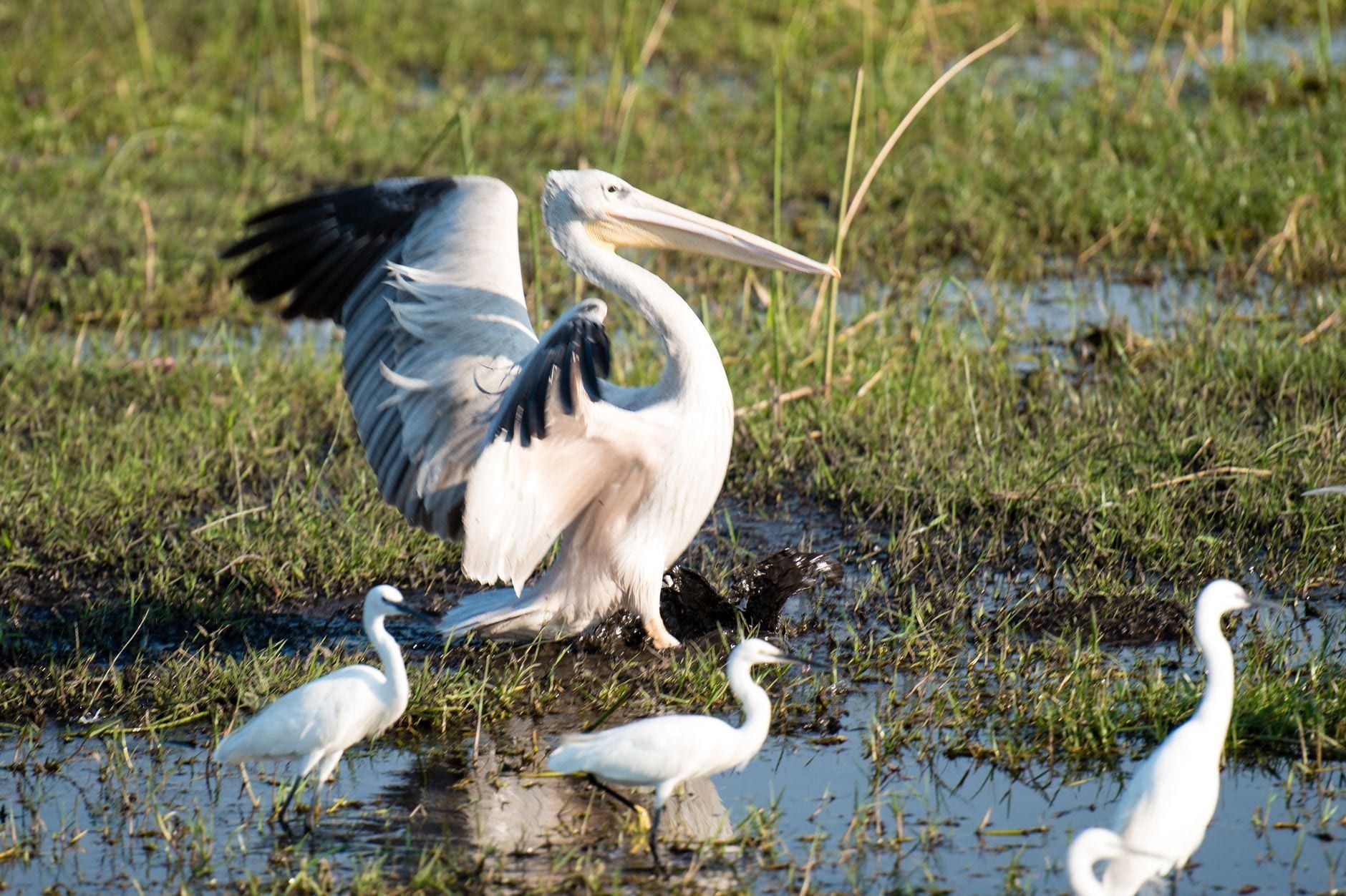
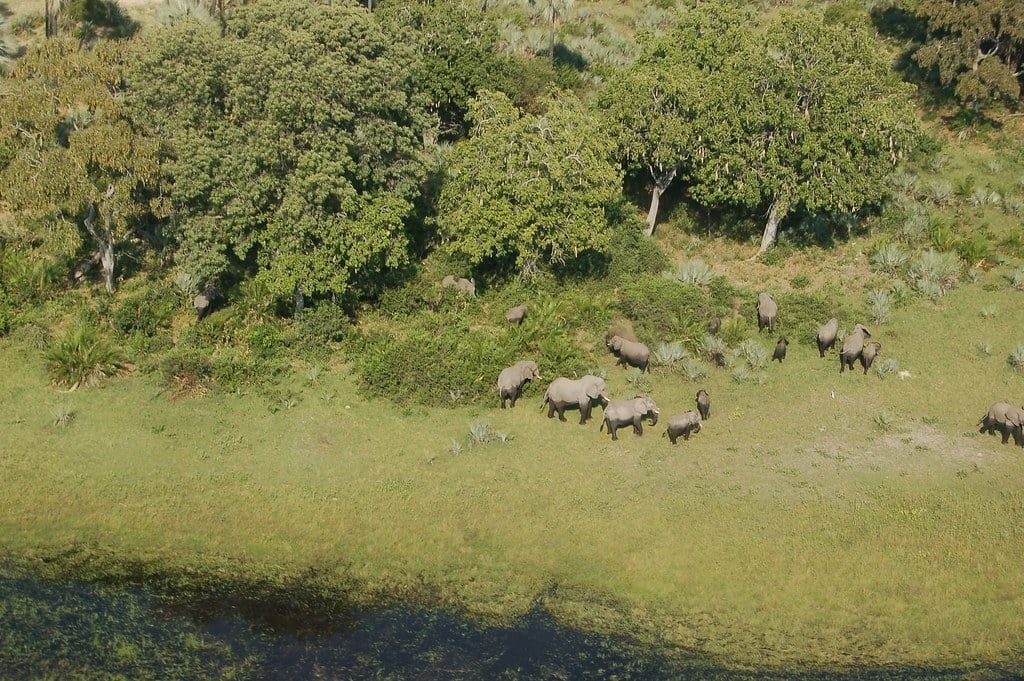
A river that never reaches the sea spreads across Botswana's Kalahari sand and becomes the world's largest inland delta — and one of the best places in Africa to watch wildlife. That river, the Okavango, rises in the Angolan highlands, flows 1,500 km south, and fans out into a maze of channels, lagoons and palm-fringed islands covering 6,000 km² in the dry months and up to 15,000 km² at peak flood. It became UNESCO's 1,000th World Heritage Site in 2014, and it holds around 130,000 elephants, all of the Big Five, and one of the continent's strongest African wild dog populations.
The catch is price. Botswana runs the Delta on a deliberate high-cost, low-volume model, so a week here can outprice two weeks almost anywhere else in Africa. This guide covers what you actually get for that money — the mokoro rides, the camps, the daily rhythm — plus when to go, where to stay, what a trip costs from budget to luxury, and how to get there. Our Okavango safari tours are a shortcut if you'd rather skip the research.
Why an Okavango Delta Safari Is Like No Other
The Delta's calendar runs backwards. Rain falls in Angola in January, and the floodwater takes two months to travel down the Okavango River, reaching the Delta around March and peaking between June and August — the middle of Botswana's dry season. So while the bush is at its most parched and game concentrates around permanent water, the channels are at their fullest. No other safari destination pairs peak land-based game viewing with peak water-based activities at the same moment.
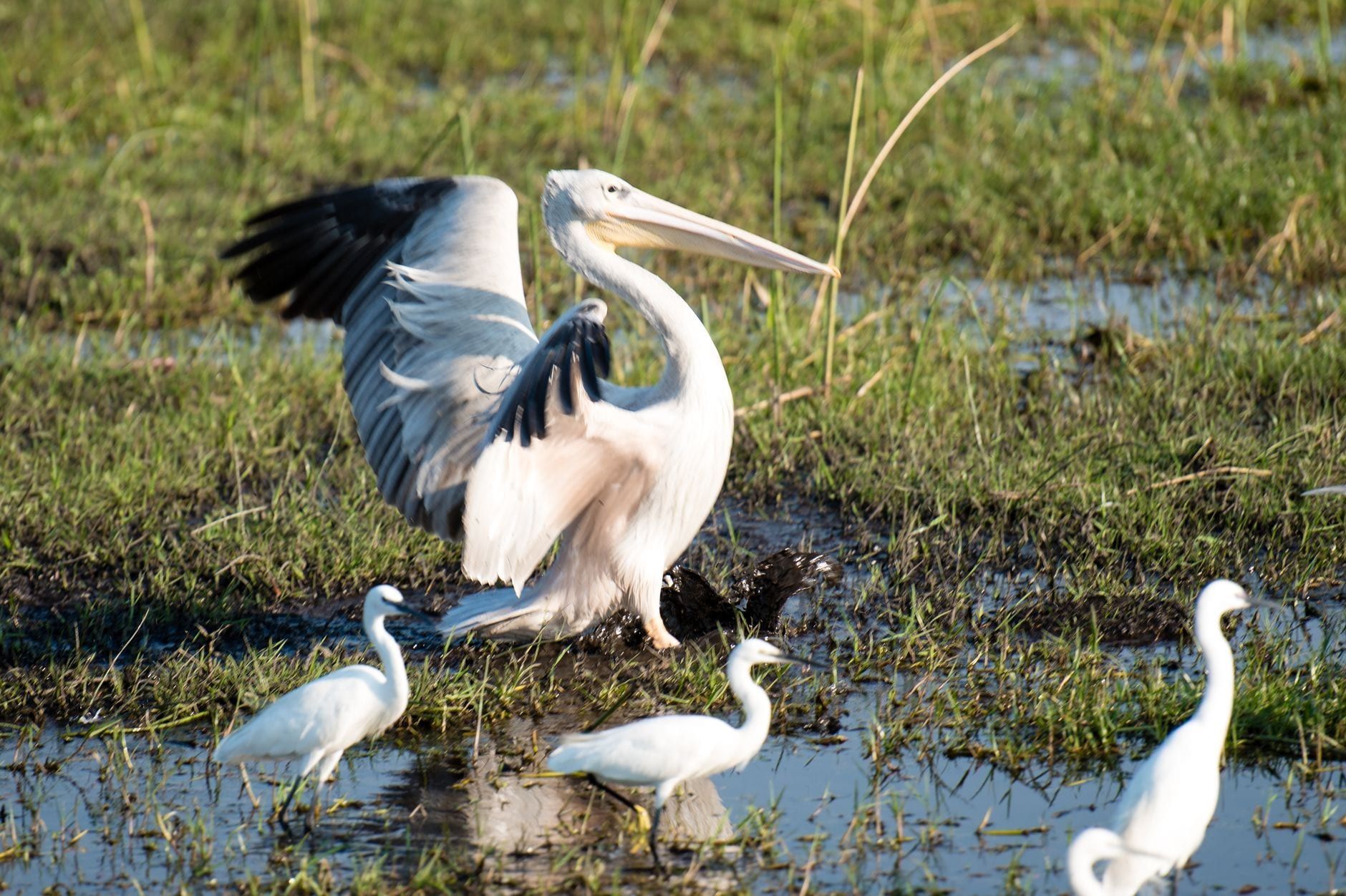
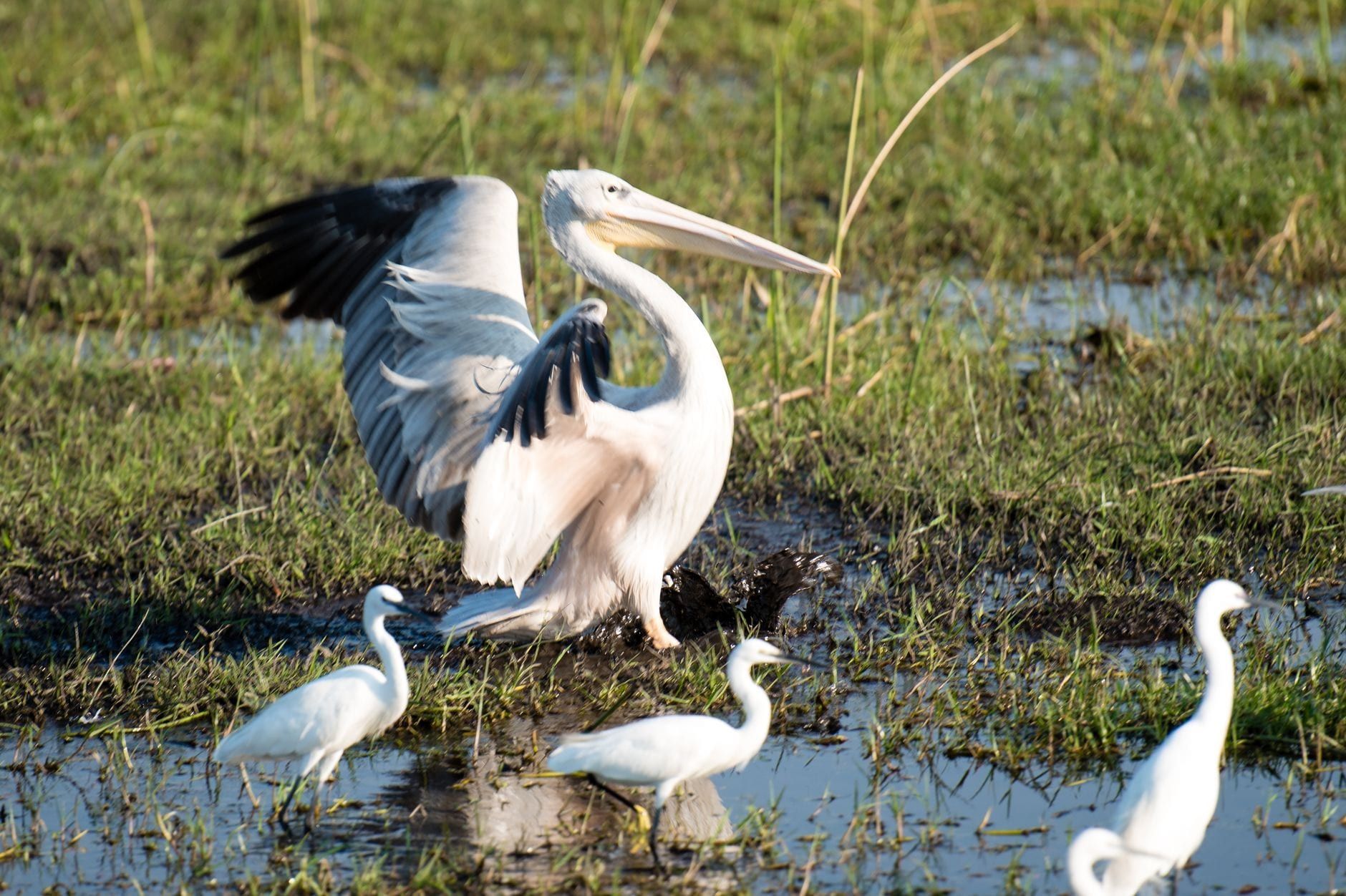
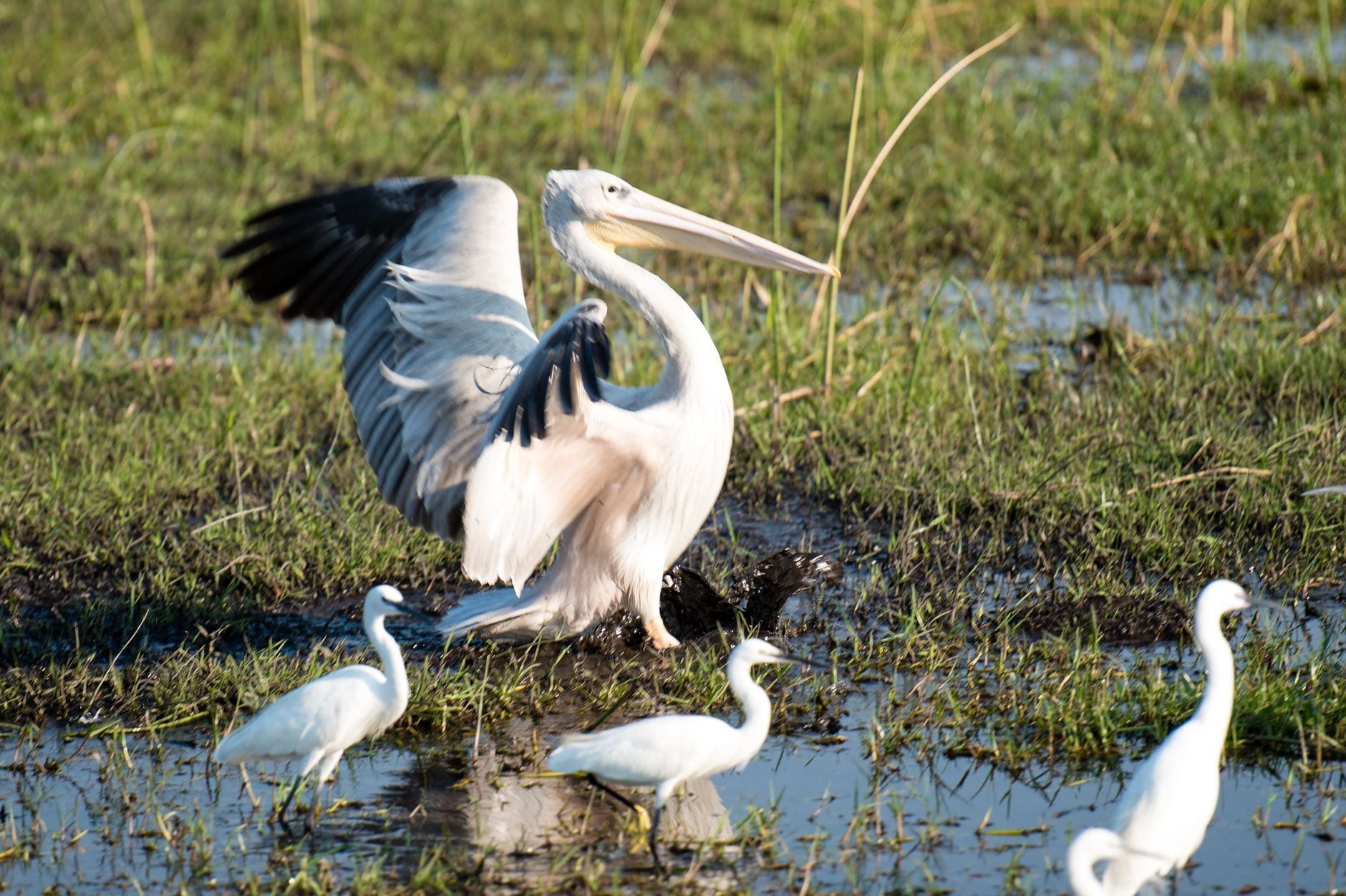
The wildlife numbers back the reputation. More than 200,000 large mammals live here across 130 species, from elephant and buffalo herds to the water-adapted red lechwe and sitatunga you'll rarely see elsewhere. Leopards thrive; wild dog packs hunt the floodplains; Moremi's rhino numbers climb year by year. Birders get 482 recorded species, including 24 globally threatened birds such as the Wattled Crane and Slaty Egret — plus the Pel's fishing owl, one of Africa's most coveted ticks. Our Okavango Delta wildlife guide goes deeper on what you're likely to see where.
Exclusivity is the other draw. Most of the Delta is divided into private concessions leased by safari companies, reached only by light aircraft, with camps unfenced and vehicle numbers capped by lease terms. A leopard sighting in the Serengeti might draw twenty vehicles; in the Delta concessions you'll usually share it with one or two, sometimes none. That scarcity is policy — Botswana keeps prices high and visitor numbers low — and it's why the Delta feels wild in a way fenced, crowded parks can't.
Best Time to Go on an Okavango Delta Safari (Month by Month)
Dry season means high water here — that's the single fact that unlocks Delta planning. The table below ties flood level, wildlife quality and price tier together month by month; current rates shift, so check camp pages before booking.
| Months | Water level | Game viewing | Rates |
|---|---|---|---|
| Nov–Mar | Low despite the rains; some camps close mid-Jan to Mar | Lush and scattered; birthing season, superb birding | ~50% of high season |
| Apr | Flood starting to arrive | Good | ~75% of high season |
| May–Jun | Flood arriving, mokoro season opening | Very good | ~75%; May is the value pick |
| Jul–Aug | Peak flood; best mokoro and boating | Prime | High season |
| Sep | Water dropping | Prime | High season |
| Oct | Lowest water; extreme heat | Prime but uncomfortably hot | High season |
Pick your window by priority. Best overall game viewing: July through October, when thin vegetation and scarce surface water pull animals to permanent channels. Best for water activities: June through August, when the flood peaks and every mokoro route runs. Best value: May, which combines rising water, clear skies, mild temperatures and shoulder rates roughly 25% below peak. Best for birding: November through April, when migrants arrive in breeding plumage — you'll also see newborn antelope and dramatic skies, at roughly half the high-season price.
Two caveats. Some lodges shut completely from mid-January through February or March, and January–March water levels are often too low for mokoro excursions even where camps stay open. If the canoe matters to you, don't gamble on the green season. Our month-by-month guide to the Okavango Delta has the detail.
Where to Safari: Moremi, Khwai and the Private Concessions
Where you sleep determines what you can do in the Delta, because the rules differ sharply between private land and the protected reserve. Match the area to your budget and your priorities before you book anything.
The private concessions
Most of the Delta outside Moremi is split into concessions leased by safari companies, and most are reachable only by small plane. Concession rules allow what the reserve forbids: night drives, off-road driving straight to a sighting, and walking safaris with armed guides. This is leopard and wild dog country, and sightings are shared with one or two other vehicles at most. The price of that freedom is real — 5-star concession camps run US$1,550–4,000 per person per night.
Moremi Game Reserve
Moremi, proclaimed in 1963 after the BaTawana community pushed to protect its royal hunting grounds, is the Delta's only officially protected area and covers roughly its eastern third, including Chief's Island. It's also the self-driver's entry point: the reserve is partly reachable by 4WD track from Maun, 92–100 km to South Gate on a road that turns to deep sand after Shorobe. Third Bridge and Xakanaxa Lagoon are the classic wildlife-rich cores. The trade-offs — no night drives, no off-roading, no walking, a 40 km/h speed limit — matter less than you'd think when the game is this dense. Gates run 06:00–18:30 April to September and 05:30–19:00 October to March.
Khwai Community Concession
Khwai sits just outside Moremi's North Gate on the Khwai River, run by the local community. It blends the best of both worlds: wildlife quality close to Moremi's, plus the night drives and guided walks the reserve bans. Camps range from high-end to simple, and because Khwai charges camping fees only — no daily entrance fee — it's the value pick for self-drivers.
Maun's edge and the Panhandle
Camps and mokoro stations near Maun are the cheapest way onto the water, at the cost of a tamer, less remote feel. The Panhandle, the narrow river corridor in the north, is a fishing and birding destination — worth it if those are your reasons for coming, skippable on a first safari.
What You'll Actually Do: Mokoro, Game Drives and a Day on Safari
A Delta safari is built from five activities, each with its own strengths, and no camp offers them all equally. Here's what each one delivers, what it can't, and how a typical camp day stacks them together.
Mokoro trips
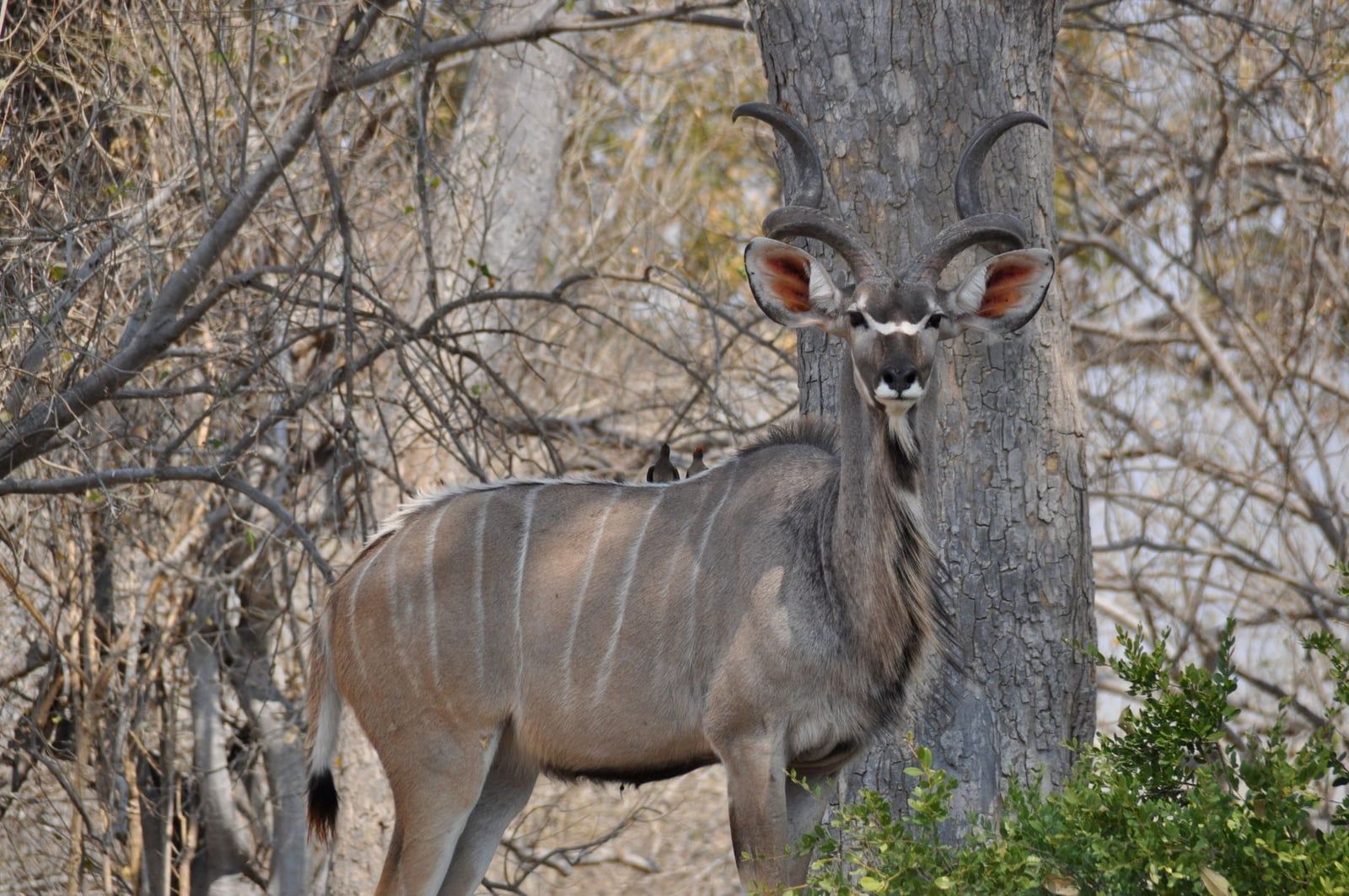
The mokoro — a dugout canoe, traditionally carved from ebony or sausage-tree wood — is the Delta's signature. A poler stands at the stern and pushes you through channels too shallow and too quiet for any boat: reed beds, day water-lilies, painted reed frogs, red lechwe on the banks. It's the best way to see the Delta's smaller life and to reach Pel's fishing owl territory, and it's silent. It is not, however, a big-game viewing method — you'll pass elephants at a distance, but the serious mammal watching happens from vehicles. Mokoro outings typically last 2–4 hours; day trips from Maun cost US$150–260. Water levels decide everything: too low and the channels dry up, too high and the poler can't push off the riverbed. Book mokoro safari tours between May and August to be safe.
Game drives
The 4WD drive is the wildlife workhorse, in open vehicles with a guide and tracker. Morning drives track lions near Chief's Island; afternoon drives end with a sundowner on a floodplain. In concessions, drivers go off-road to reach a kill or a den; in Moremi they stick to tracks, which occasionally means watching a leopard from further away than you'd like. Reference prices out of Maun run US$225–400 per person for a day's guiding.
Boat cruises
Motorboats cover the bigger channels a mokoro can't, and they're the platform for hippo, crocodile and elephant viewing from the water — often at eye level and startlingly close. Camps around Xakanaxa run lagoon cruises through papyrus fringe; from Maun, motorized boat day trips cost US$200–280.
Walking safaris and night drives
Concession access unlocks both. On a guided walk (US$150–250 from Maun, usually with an armed guide), you read tracks, dung and termite mounds instead of ticking species — the Delta experienced at ground level and on foot. Night drives, impossible inside Moremi, run from about 18:30 with a spotlight: bush babies, genets, aardvarks, honey badgers, and lions hunting in the dark.
Scenic flights
Flights out of Maun run from 15 minutes to over an hour (US$325–900), and from the air you finally grasp the Delta's scale — palm islands and braided channels to the horizon. Helicopters cost more than fixed-wing aircraft but can fly with the doors off, which for photographers is the whole point.
The daily rhythm
A day in camp follows a set rhythm. Wake-up around 05:00–05:30, coffee, then a dawn drive while predators are still active. Back by 10:30 for brunch and the midday lull — siesta, pool, or a boat cruise in the 11:00–14:00 window. Tea at 15:30, then the afternoon drive or mokoro until sunset around 18:30, followed by dinner and, in concessions, an optional night drive. Three activities a day, every day. By day three you'll know exactly why people book a week.
What an Okavango Delta Safari Costs (Budget to Luxury)
Three safari styles dominate the Delta, and the price gap between them is enormous. The comparison below puts the two extremes side by side; serviced mobile camping — a crewed camp that moves with you — splits the difference at roughly US$450–750 per person per day.
| Fly-in luxury camp | Self-drive Moremi | |
|---|---|---|
| Nightly cost (pp) | US$525 mid-range (low season) to US$1,550–4,000 at 5-star camps | Park campsites BWP 60 pp/night; private wild campsites BWP 200 pp |
| Getting there | Light aircraft from Maun, US$220–260 one way, often bundled in the rate | Rented 4WD at US$250–350/day, 2–3.5h from Maun to South Gate |
| Park fees | Included in the package | BWP 270 pp/day plus vehicle fee, paid at the DWNP office in Maun |
| Activities | Drives, mokoro, boats, walks and night drives, all included | Self-guided drives only; night drives and walks need Khwai next door |
| Realistic 7-day total (pp) | US$4,200–11,000; US$20,000+ at the top camps | Lowest cost per day in the Delta once the vehicle is split |
The middle tiers fill in between. Budget participation safaris — you help pitch camp and cook — start around US$100–250 per person per day. Standard serviced camping runs US$400–500, 3-star lodges US$500–700, and 4-star lodges US$600–950. All-inclusive Delta safaris as a category span roughly US$200–5,000 per person per day. The accommodation guide covers which camps sit where; current gate rates are in our hours and fees page.
Know what's in the rate. Luxury camp prices include meals, drinks, all activities and usually the light-aircraft hops between camps — the number that looks outrageous and often isn't. On top of any style, budget for tips in cash (US$10–20 per day for guides, roughly US$20 per guest per day for lodge staff), international flights, and anything booked separately from Maun, like scenic flights or mokoro day trips.
Why so expensive? Fly-in logistics — every litre of fuel and loaf of bread reaches these camps by air or boat — stacked on Botswana's deliberate low-volume policy. The upside is baked in: you're paying for empty floodplains and uncrowded sightings, not thread count. And the same trip in December costs roughly half what it does in August.
Getting There and Staying Safe
Maun is the gateway. Airlink and CemAir fly there from Johannesburg in about 90 minutes, Airlink serves Cape Town, Air Botswana connects Gaborone, and Ethiopian is the only long-haul carrier into the airport. Most camp packages bundle the connecting flight. From Maun you either take a light-aircraft hop of 10–45 minutes to a bush airstrip, a road-and-boat transfer of 2–6 hours (US$100–400), or — for Moremi and Khwai — you drive yourself. Full routes are in our directions to the Okavango Delta guide. Kasane, in the north, works as an alternative if you're pairing the Delta with Chobe; its airport is about an hour's flight from Maun.
Visa on arrival at Maun is straightforward and costs US$30 — bring cash in US dollars. Botswana bans plastic carrier bags outright, and don't pack a drone: they must be pre-registered with the civil aviation authority, flying over parks is prohibited, and drones have been confiscated at the airport.
Self-driving is the riskiest thing you'll do here, and it's not the wildlife. Moremi's tracks are deep sand and mud with water crossings of unknown depth — the classic way vehicles get stuck or drowned. Carry a shovel, sand ladders, a compressor and a second battery, deflate your tyres for sand, travel in convoy where possible, and remember there's no cell signal inside the park. Confirm road conditions in Maun before you set out; January–March rains close routes regularly.
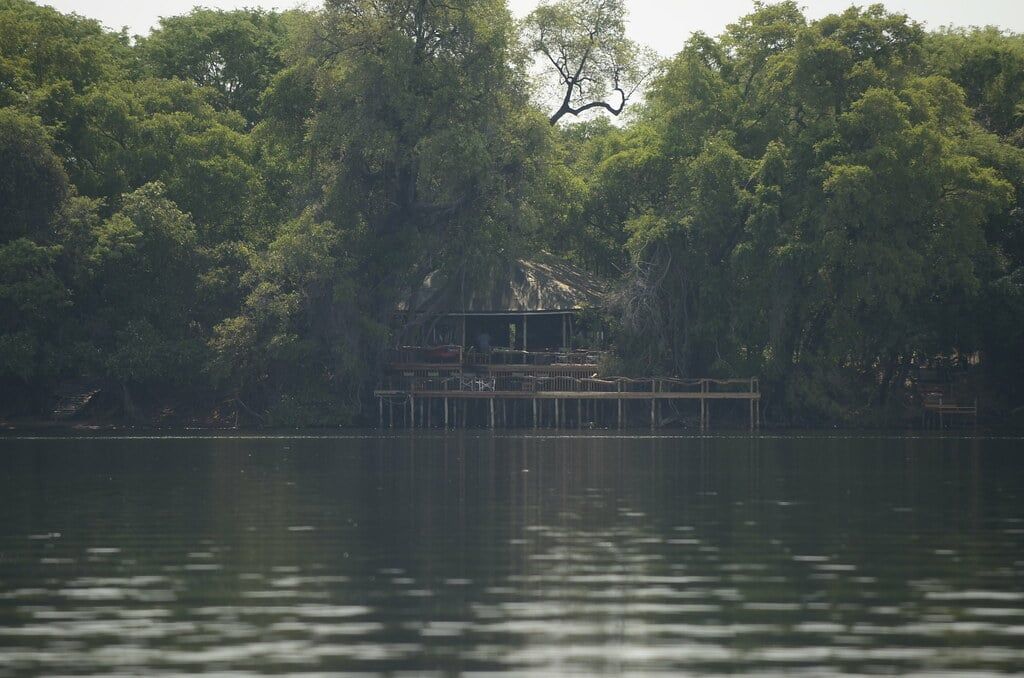
In camp, the rules are simple and non-negotiable. Camps and campsites are unfenced: never walk between tents after dark without an escort, always carry a torch, and if an elephant walks through your campsite, you wait it out — ideally in a vehicle. Around water at night, hippos, not lions, are the animal that injures most people. Give the riverbank a wide berth after sunset.
Health-wise, the Delta is a higher-risk malaria area, especially November to April: take prophylaxis year-round, use repellent, and cover up at dawn and dusk. Drink bottled water. Pack neutral khaki and olive layers — bright colours disturb animals, and camouflage is illegal for civilians — with a fleece and beanie for winter dawn drives, which start near 10°C before afternoons climb to 25–30°C.
How Many Days You Need (and Sample Itineraries)
Three nights is the accepted minimum for the Delta, five to seven is the comfortable recommendation, and ten days to two weeks lets you add a second region without rushing. The rule of thumb: with 3–4 days, spend the money on a fly-in to one or two camps deep in the Delta rather than spreading a small budget thin. With a week, mix water and land.
Three days, self-drive budget
- Day 1: rent a 4WD in Maun, buy park permits at the DWNP office, drive to Moremi South Gate, camp.
- Day 2: dawn drive toward Third Bridge and Xakanaxa Lagoon; camp at Xakanaxa.
- Day 3: book a boat trip (~US$40/hour), drive out to Maun via Khwai.
Seven days, fly-in plus Moremi
- Days 1–3: fly from Maun to a water camp in a private concession — mokoro, boat cruises, night drives.
- Days 4–5: fly or drive to a second camp on the Khwai River or Chief's Island edge for drives and walks.
- Days 6–7: self-drive or transfer through Moremi (Third Bridge, Xakanaxa), exit via South Gate to Maun.
Both skeletons bend to season and budget, but the second is the one most first-timers end up wishing they'd booked — it covers water activities, concession privileges and Moremi's game in a single week.
The Delta also combines naturally with the rest of the north. Chobe National Park, about an hour's flight away, has elephant herds along its riverfront and boat cruises among them; Victoria Falls sits just beyond Kasane, and the two pair with the Delta into the classic ten-day Botswana circuit. If you have two weeks, add Cape Town or the Makgadikgadi salt pans. See what's available across all Okavango Delta tours to compare trip lengths.
Okavango Delta Safari: Frequently Asked Questions
When is the best time for an Okavango Delta safari?
July–October for wildlife, when dry-season conditions concentrate animals at permanent water. June–August adds the peak flood, so mokoro and boating run at their best. November–April is green season: superb birding and roughly 50% rates from December to March, but some lodges close mid-January to March and water is often too low for mokoro.
How much does an Okavango Delta safari cost?
Budget participation camping starts around US$100–250 per person per day, serviced mobile camps run US$450–750, and luxury fly-in camps charge US$1,550–4,000+ per night. A quality 7-day trip typically lands between US$4,200 and US$11,000 per person, and can exceed US$20,000 at the top camps.
How many days do you need for an Okavango Delta safari?
Three nights is the accepted minimum, ideally as a fly-in to one or two camps. A week allows two or three camps or a Delta-plus-Moremi/Khwai combination. Ten days to two weeks is the ideal length if you want to explore more than one area without rushing.
Can you do the Okavango Delta on a budget?
Yes. Self-driving Moremi costs BWP 270 per person per day in park fees plus BWP 60 per person per night for park campsites — private wild campsites run around BWP 200. Add a 4WD rental (US$250–350/day), shared between travellers, and a boat safari at about US$40 per hour.
What is a mokoro safari?
A mokoro is a traditional dugout canoe, poled by a guide standing at the stern through shallow, papyrus-fringed channels. It's the classic Delta activity — silent, close to the water, and best for birding (Pel's fishing owl especially) rather than big game. Trips last 2–4 hours and depend on water levels: best May–August, often impossible in the low-water months.
How do you get to the Okavango Delta?
Fly into Maun, the main gateway, with connections from Johannesburg (about 90 minutes), Cape Town and Gaborone; Ethiopian is the only long-haul carrier into Maun. From there, reach camps by light aircraft (US$220–260 one way, 10–45 minutes) or self-drive a 4WD to Moremi and Khwai. Visa on arrival at Maun costs US$30 in cash.
Is an Okavango Delta safari safe?
Botswana is one of Africa's safest countries and crime in the Delta is almost nonexistent. The real risks are self-drive water crossings and unfenced camps: never walk after dark without an escort, carry a torch, wait out elephants in camp from a vehicle, and remember hippos — not lions — injure the most people around water.
Will I see the Big Five on an Okavango Delta safari?
All five occur. Moremi's rhino numbers are increasing year by year, and the Delta is famous for predators — lion, leopard, cheetah and especially African wild dog, one of the continent's strongest populations. In total the Delta holds more than 200,000 large mammals and 482 bird species.