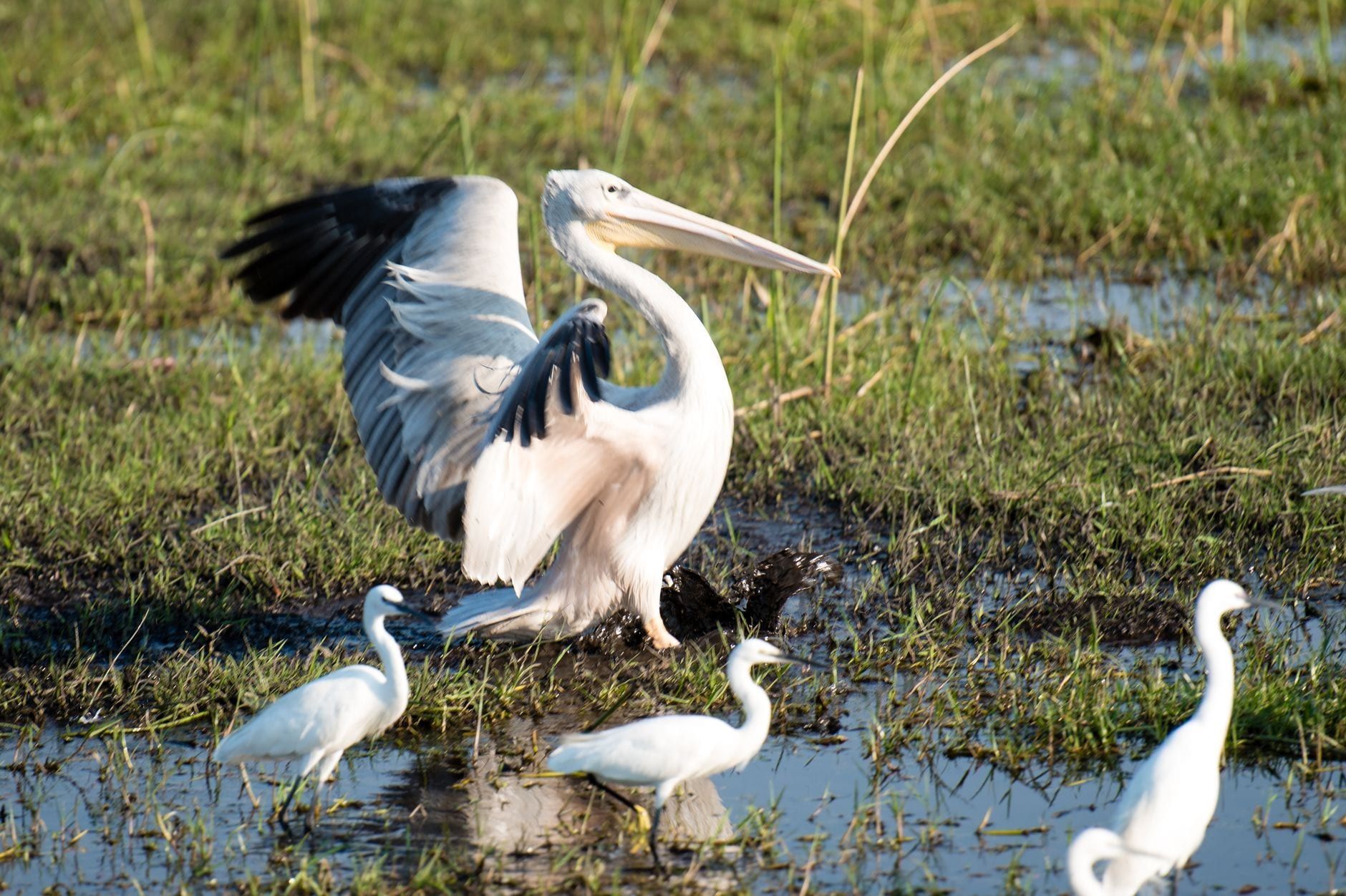
There are no towns, no hotels and no roads worth the name in the inner Okavango Delta — just a few dozen camps scattered across roughly 150,000 islands of reed, palm and sand. You reach almost all of them by light aircraft, and you pay one rate that covers everything: the bed, the food, the drinks and two guided activities a day.
That system produces some of the most expensive beds in Africa — Mombo tops out above US$5,000 per person per night in peak season — and also some of the cheapest ways into the Delta, at around US$100–150 a day on a participation camping safari. This guide covers the full range: how the camps work, which type and area suit you, what each tier costs, and how the flood calendar should shape the booking.
How accommodation in the Okavango Delta works
Nearly every bed in the Delta belongs to an all-inclusive fly-in camp, because there is nothing else out there — no villages in the swamps, no roadside lodges, no grid. One nightly rate typically covers your room, all meals, drinks and two guided activities a day, from dawn mokoro trips to night drives. You arrive by light aircraft, unpack once, and the concession outside your tent is the entertainment.
Botswana's rules shape what the camps look like. All accommodation in the Delta must be non-permanent to limit environmental impact, and every property is graded by the Botswana Tourism Organization — a rough yardstick for comparing standards. "Non-permanent" spans a wide range, from classic Meru canvas tents on sandy platforms to design-led suites you'd struggle to call a tent at all.
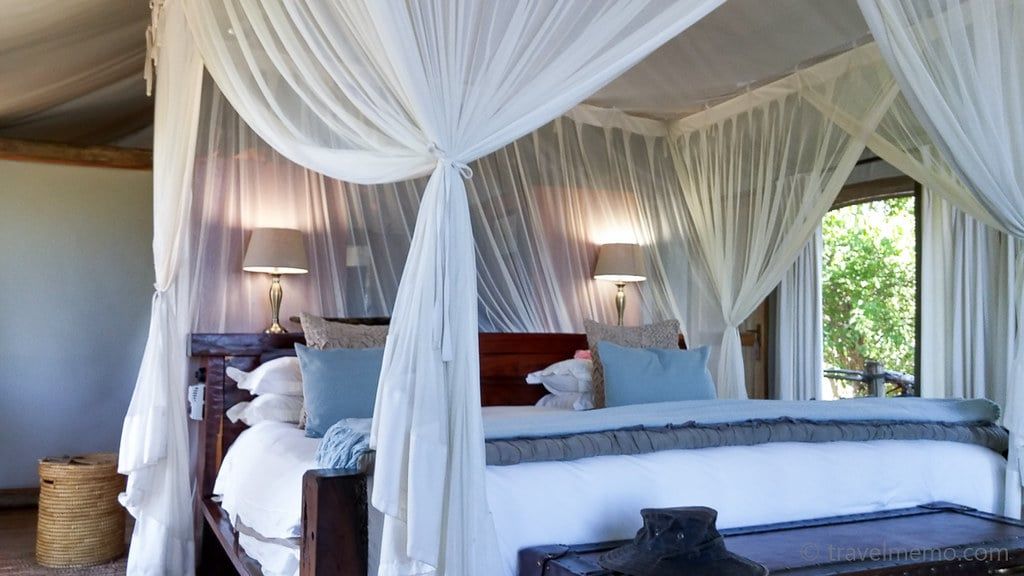
Most camps sit on large private concessions, some shared with no other camp at all. That is the source of the Delta's signature experience: a lion sighting with two vehicles instead of twenty. The camps are run by a handful of outfitters — Wilderness, &Beyond, Desert & Delta, Ker & Downey, Great Plains, Natural Selection — alongside independent and owner-run operations, so the same concession can hold wildly different products.
The setting explains the pricing. The Delta is a UNESCO World Heritage Site (the 1,000th, inscribed in 2014) with 482 recorded bird species and about 130,000 elephants at its core, and Botswana has deliberately kept tourism high-spend and low-impact: fewer beds, higher rates, less strain on the land. For background on the region, see our guide to the Okavango Delta's history and highlights.
Water, land or mixed: the three types of Delta camp
Every Delta camp fits one of three buckets, and knowing yours cuts a field of dozens down to a handful. The split comes down to water — where it sits year-round, what it allows and what it rules out.
Water camps
Water camps sit in the permanent delta, where channels and lagoons never dry. Days run to mokoro excursions, motorboat cruises and birding; big-game drives are usually impossible because the terrain won't carry a vehicle. Camp Okavango, on Nxaragha Island, runs water activities year-round, while Jacana is the purist's choice — mokoro and boating, with game drives only in the summer months. Eagle Island, Setari and Xugana sit in the same bucket. If drifting past reed frogs and elephants at eye level is the point of your trip, start with a mokoro-focused safari and these camps.
Land camps
Land camps occupy dry ground and run the classic game-drive machine: morning and afternoon drives, predator tracking, and in the concessions, off-road driving to reach the sighting. Mombo, Chief's Camp and Chitabe are the reference points, and the viewing ranks with anywhere in Africa. The trade-off is plain — no mokoro, and often no water in sight.
Mixed camps
Mixed camps offer both activity sets, which makes them the default for first-timers. Read the fine print, though: many mixed camps only run water activities once the annual flood arrives, so a November booking can turn land-only whether you planned it or not. Three camps guarantee land and water year-round — Kwara, Shinde and Kanana — and that guarantee is worth paying for outside the May–August flood window.
Where to stay: the Delta's key areas and concessions
The Delta divides into recognisable areas, each with its own character, price band and access. Match the area first, the individual camp second.
Moremi Game Reserve and Chief's Island
Moremi Game Reserve protects the Delta's eastern third and holds its most celebrated real estate: Chief's Island, the largest landmass in the Delta and the former royal hunting ground of the BaTawana. Mombo and Sanctuary Chief's Camp both sit here, along with Camp Moremi and the value-oriented Moremi Crossing near the Khwai River. Inside the reserve the rules are stricter — no off-road driving, no night drives, no walking — so camps here trade on location alone.
The private concessions
Around the reserve lie the NG (Ngamiland) concessions — unfenced blocks where wildlife moves freely between areas and on toward Chobe. Vumbura, Jao, Duba, Chitabe and Kwara are the names to know. Concessions buy what the reserve cannot: off-road driving, night drives, armed walking safaris, and vehicle counts so low you can go a full day without seeing another one. All are fly-in.
Khwai and the community areas
The Khwai Private Reserve is a 200,000-hectare community-managed concession holding Tuludi, Sable Alley, Little Sable, Elephant Pan and the Skybeds star-bed platforms. Rates sit noticeably below the flagship concessions for land-plus-water game viewing. Next door, the Khwai Community Concession permits night drives and guided walks and charges camping fees only — no daily entrance fee — which makes it the value entry point for self-drivers.
The Panhandle
The Panhandle, where the Okavango River enters Botswana in the far north, is a different product altogether: cheaper fishing and mokoro lodges on permanent water, drivable from Maun, and within reach of the Tsodilo Hills rock-art sites. You trade big game for river life and lower rates. Plenty of travellers like that trade.
Choose by priority. Big-game maximum: Moremi or the dry concessions. Water and quiet: the permanent delta or the Panhandle. Best value per sighting: Khwai. To weigh what you might actually see where, read our Okavango Delta wildlife guide.
What Okavango Delta accommodation costs
Delta rates span a fiftyfold range, from mobile camping to Mombo. Here is the full ladder, using published low-season per-person-per-night rates as the comparison point.
| Tier | Typical rate | Example camps |
|---|---|---|
| Mobile camping & campsites | US$100–200 per day | Participation safaris; Moremi public campsites |
| Value tented camps | US$404–690 | Tumani, Moremi Crossing, Camp Moremi |
| Mid-range | US$718–995 | Machaba, Pom Pom, Jacana, Sable Alley |
| Premium | US$1,545–2,500 | Tuludi, Kwara, Shinde, Nxabega |
| Ultra-luxury flagships | US$1,848–5,043 | Jao, Chief's Camp, Duba Plains, Mombo |
At the bottom rung, participation camping safaris — you help erect the tent and sometimes cook — start around US$100–150 per person per day all-inclusive. Self-drivers can go cheaper still: Moremi's public campsites at South Gate, Khwai Gate, Xakanaxa and Third Bridge cost roughly BWP 60 per person per night for international visitors, on top of the BWP 270 daily park fee. Third Bridge also rents elevated en-suite safari tents on a self-catering basis. Book every night before you arrive — sites cannot be booked at the gate — and confirm current rates on our hours and fees page.
What does the rate include? At a fly-in camp: accommodation, all meals, drinks including most alcohol, twice-daily activities and laundry. The standard extras are the light-aircraft legs (about US$220–260 per person each way), some park and concession fees, premium wines, spa treatments and gratuities. A US$600 camp is therefore really a US$900 camp once the Maun flights are in. Budget that way from the start.
Two worked examples. A 5-day Moremi mobile camping safari comes to roughly US$1,000–1,750 per person all-inclusive. A 7-day budget lodge combo — say Oddballs Camp plus Moremi Crossing — lands near US$3,000–3,700 per person. Both deliver the Delta at a fraction of flagship prices.
The best Okavango camps for your travel style
Area and price sorted, the last filter is you. Below, the camps that earn their keep for each traveller type — with the age policies and catches that brochures bury.
Honeymooners
Jao is the pick: seasonal star-bed sleep-outs and one of Botswana's best safari spas, on a private island. Eagle Island trades on plunge pools and its own island setting. Kala is small and takes no children under 12, which is close enough to adults-only for most couples.
Families
Chief's Camp runs a children's retreat and takes kids from six; Duba Plains has a Young Explorers programme; Chitabe Lediba and Shinde Footsteps both cater to families. One caveat applies everywhere: children under 12 usually require a private vehicle at extra cost, so get the age policy in writing before you commit.
First-timers
Sandibe, Vumbura Plains and Kanana are the benchmark all-rounders — polished, reliable, and offering land and water without flood-dependent asterisks. Book one of them and you can't go far wrong. For a fuller walk-through of what a first trip involves, see our Okavango Delta safari guide.
Wildlife and photography
Mombo, for predator density and a photography hide. Duba Plains, for its lion-versus-buffalo dynamic. Chitabe, for African wild dogs. These are working wildlife destinations first and accommodation second — plan accordingly.
Water lovers and birders
Xugana, Jacana and Camp Okavango for channel life and slow mornings. Kanana for exclusive access to a heronry that fills with breeding birds in season. Bring the long lens.
Off the big-name trail
The boutique and owner-led tier — Kala, Tuludi, Kanana, Shinde — delivers concession-quality guiding at keener rates than the flagships, often with more personality. Kwara deserves a flag for adults-only travellers: no children under 16, and boating, mokoro, fishing and walking all year.
When to go: how the annual flood shapes your choice of camp
The Delta's water calendar runs back to front. Local rains fall from November to March, but the flood that fills the channels is Angolan rainwater that left the highlands months earlier. It enters Botswana between mid-March and mid-May and can take six months to work through to the farthest waterways. Water is highest from about May to August, peaking in July, then falls until around February.
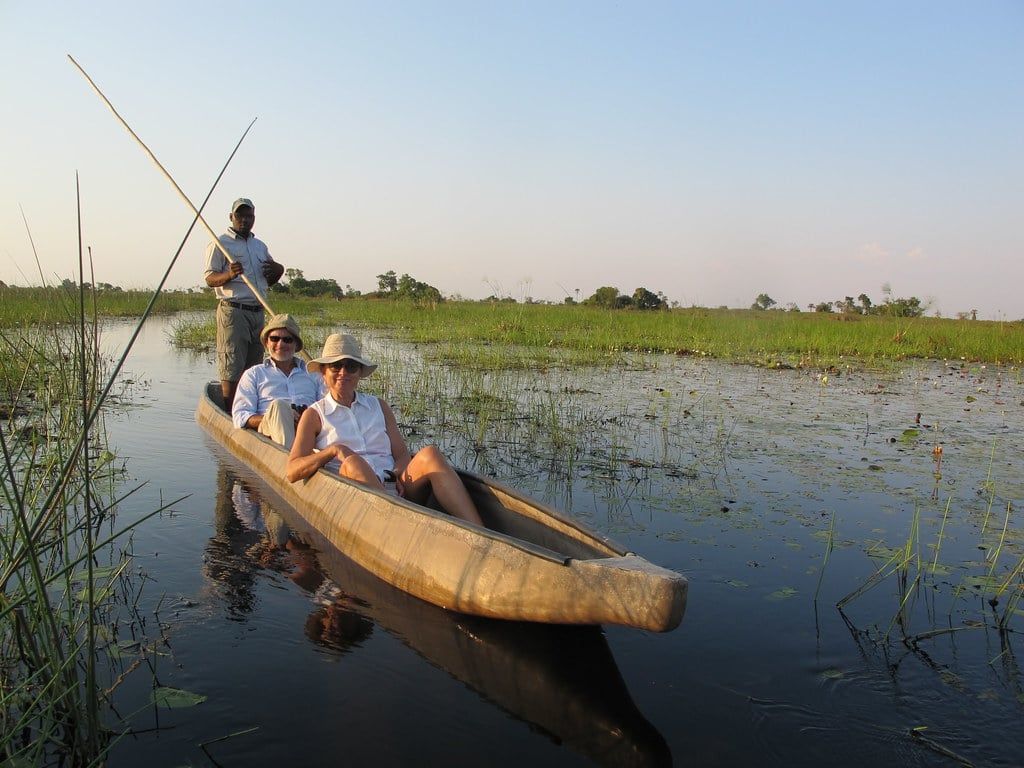
Match that to your plans. Peak water, May to August, is when mokoro and boating are at their best everywhere. The dry season, June to October, is prime game viewing, as wildlife concentrates on permanent water. The two overlap neatly in June, July and August — which is why those months book out first.
Green season, November to March, splits opinion. Rates drop, birding peaks with migrants in breeding plumage, and newborn antelope appear — but many camps scale water activities back or stop them, heavy rain can close roads, and some lodges shut entirely in January and February. October is the other edge case: superb game viewing, low water, and daytime highs above 30°C.
Geography hedges some of this. The further north and east in the Delta, the more water you'll have; the Panhandle is permanent. The rule of thumb: pick the camp for your month, not the brochure — a "mixed" camp in December may be land-only in practice. Our best time to visit guide has the month-by-month detail.
How many nights and how many camps
Three to four nights in one camp is the minimum that justifies the flying — arrive, settle, and you've barely started finding the animals. Five to seven nights split between two camps is the sweet spot for most trips.
The classic pairing is one land-focused camp and one water-focused camp: a game-drive block at Mombo or Chitabe, then mokoro country at Jacana or Camp Okavango. You see both halves of the Delta for one set of inter-camp flights.
One camp is enough if the trip is short or the camp is genuinely mixed year-round, like Kanana or Shinde. Just don't pair those two with each other — they share an operator and an aesthetic, so planners treat them as alternatives rather than a combination. When you double up, vary the operator.
Getting there and booking your stay
Maun is the gateway. Airlink and CemAir fly there from Johannesburg in about 90 minutes to two hours, Air Botswana connects Gaborone, and Ethiopian Airlines is the only long-haul carrier into the airport. Kasane works as a secondary hub when you're combining the Delta with Chobe and Victoria Falls.
From Maun, nearly all camps are reached by shared light aircraft or helicopter — hops of 10 to 45 minutes to bush airstrips, at roughly US$220–260 per person each way. Pack soft bags; the limit is 20 kg including hand luggage. A handful of camps break the pattern: Camp Moremi is 140 km from Maun by sandy road (or a 25-minute flight), and the Khwai-area camps are drivable on self-drive itineraries. Full transport options are in our directions to the Okavango Delta.
Booking runs through two channels: direct with the camp-owning operator, or — the usual route — through an independent tour operator who tailors itineraries across different operators' camps and bundles the inter-camp flights. Either way, lead times are the story. Mombo books out 12 or more months ahead for peak season, and June–October beds across the board go early. Start a year out if you can.
Okavango Delta accommodation FAQs
How much does Okavango Delta accommodation cost per night?
Participation camping safaris run about US$100–200 per person per day all-inclusive. Low-season value camps start near US$404–600 (Tumani, Moremi Crossing), mid-range runs US$700–1,000 (Machaba, Jacana, Eagle Island), premium US$1,250–2,500 (Kwara, Shinde, Tuludi), and ultra-luxury flagships reach US$1,848–5,043, with Mombo at the top.
What's included in the nightly rate at an Okavango camp?
Usually everything: your tent or room, all meals, drinks including most alcohol, twice-daily guided activities and laundry. Typical extras are light-aircraft transfers (roughly US$220–260 per person each way), some park and concession fees, premium wines, spa treatments and gratuities. Ask for the camp's inclusions list before paying a deposit.
Can you stay in the Okavango Delta on a budget?
Yes. Mobile camping safaris cost around US$100–200 per person per day all-inclusive, and self-drivers can book Moremi's public campsites at South Gate, Khwai Gate, Xakanaxa and Third Bridge with their own vehicle and gear. Sample totals: a 5-day Moremi mobile at US$1,000–1,750, or a 7-day budget lodge combo near US$3,000–3,700 per person.
Do you have to fly into the Delta camps?
Most remote camps, yes — shared light-aircraft or helicopter hops of 10–45 minutes from Maun, at roughly US$220–260 per person each way. Road access exists, though: Camp Moremi is about 140 km from Maun on sandy road, and Khwai-area and community-concession camps are drivable on self-drive itineraries.
Should I pick a water camp, a land camp or a mixed camp?
Water camps (Camp Okavango, Jacana, Eagle Island) centre on mokoro, boating and birding. Land camps (Mombo, Chief's Camp, Chitabe) centre on game drives and predators. Mixed camps do both, but many only run water activities in flood season — Kwara, Shinde and Kanana guarantee land and water year-round.
When is the best time to stay for mokoro and water activities?
Floodwater from the Angolan highlands enters Botswana between mid-March and mid-May and takes up to six months to cross the Delta, so water is highest from May to August, peaking in July — prime mokoro and boating season. Travelling outside that window and water matters? Book a year-round water camp such as Kwara, Shinde or Kanana.
How many nights should I book, and should I stay at one camp or two?
Three to four nights per camp is the minimum that justifies the flights; five to seven nights split between two complementary camps — one land-focused, one water-focused — is the ideal structure. Kanana and Shinde share an operator and aesthetic, so pair either with a different operator's camp rather than with each other.
Which Okavango Delta camps are family-friendly?
Policies vary sharply. Chief's Camp takes children from six and runs a children's retreat; Duba Plains has a Young Explorers programme; Chitabe Lediba and Shinde Footsteps cater to families. Kwara is adults-only (16+) and Kala accepts no children under 12. Under-12s often require a private vehicle at extra cost.